All Thailand Experiences, Live with No Regrets, Lesson 1

Learning to Live with No Regrets, Lesson 1

We all have regrets because of something we did or didn’t do or something that happened to us or what we did to others in the past. This could be devastating for any decision making we do now and in our future. This is the biggest weapon Satan has.  He gets into our souls and convinces us we are not worthy of God’s Love.

Using Scripture we are going to show you how to break the chain of Satan’s hold on your life because of regret. This subject is so important we will spend several lessons on the subject.

Hello again, I’m Randy Gaudet, founder and director of All Thailand Experiences. Those who have read my profile know how I first came to Thailand and my association with missions and churches since 1989.

We use funds from our tours to help the needy, change lives and spread the Good News of the Gospel of Jesus Christ. We teach about the Holy Trinity, Love and Grace because of Jesus Christ and to tell Christians they are free from the Law, sin and death.

lAt most churches in Thailand the old covenant law is being taught and that Grace is not available to you if you break the law. We are training pastors about the New Repentance as written in the Bible with help from Pastors Nathan and Salila Gonmei at Abundant Grace Church in Chiang Mai.

On all our All Thailand Experiences Christian teaching blogs I will point to scriptures and explain the meaning on the topic. As our mission is to reach Thai people we will then watch or listen to Pastors Nathan and Solila give a sermon on the topic in English and Thai Languages.

Today we’re going to talk about Learning to Live with No Regret.

Isaiah 43:18-19 “Do not call to mind the former things, or ponder things of the past. 19 “Behold, I will do something new, now it will spring forth; will you not be aware of it? I will even make a roadway in the wilderness, rivers in the desert.” 

God is telling Isaiah “do not call to mind the former things, or ponder things of the past.” He is literally saying that we are to receive God’s forgiveness and look ahead to our future.

We all have a past and some things are not so good, therefore we need to ask God for forgiveness, learn from our past mistakes, make amends if at all possible with the one we hurt and look forward to the new things the Lord will do in our lives.

When studying the Bible, we see that God used the least likely people to do some of the most amazing things for Him. He chose the adulterer, the murderer, the thief, and the prostitute. God used them as an example for us.

So if God used people like King David who was an adulterer and a murderer and others; why not us? Jesus died on the cross for us and once we accept Him as our Lord and Savior we are new creatures in Him (2 Corinthians 5:17). Galatians 2:20 tells us: “I have been crucified with Christ; and it is no longer I who live, but Christ lives in me; and the life which I now live in the flesh I live by faith in the Son of God, who loved me and gave Himself up for me.”

Believers need to quit living in the past because God wants us to focus on what is ahead of us and forget what happened yesterday or many years ago; since Jesus paid the price for us on the cross and blotted out all our sins. “I, even I, am He who blots out your transgressions, for my own sake, and remembers your sins no more.” Isaiah 43:25

We need to learn to put the past behind us. So we may ask: How could God ever forgive me? According to Lamentations 3:22-23, God’s mercy is new every morning, and the Lord tells Jeremiah that He will forgive their iniquity, and will remember their sins no more (Jeremiah 31:34). He told Isaiah: “Though your sins are as scarlet, they will be as white as snow; though they are red like crimson, they will be like wool” (1:18).

God wants to heal everything that hurts us, but first we have to choose to let it go. Just like David we need to acknowledge our sin and ask God to forgive us. “I acknowledged my sin to You, and my iniquity I did not hide; I said, “I will confess my transgressions to the Lord”; and You forgave the guilt of my sin.” (Psalm 32:5)

After a strong exhortation to forget the former things, the Lord says, “See, I am doing a new thing! Do you not perceive it?” This question is vital to understanding how dwelling on the past affects us. The fact is, when we are caught up in the thoughts and events of the past, wallowing in the hurts and pain of yesterday, we become oblivious to the “new” things the Lord is doing all around us. That’s why God asks, “Do you not perceive it?” The perceptions of someone who struggles with letting go of the past literally become dulled—keeping them from “seeing” the good things the Lord is doing all around them.

We must get our eyes off the past and fasten them upon the power of the Lord. The writer of Hebrews tell us to: “…fix our eyes on Jesus, the author and perfecter of our faith…” (Hebrews 12:2) This cannot be done when our eyes are fixed on our past.

While there is a place and time to recollect the events of the past to gain a heart of wisdom, there is also a time to just let it go—release it. The apostle Paul said: “Not that I have already obtained it or have already become perfect, but I press on so that I may lay hold of that for which also I was laid hold of by Christ Jesus.” (Philippians 3:12)

God does not want us to go through life looking in the rear view mirror. It’s time now to look ahead and focus on what’s before us. God wants to do a new thing in our lives. He wants us to rise up to our full potential in Him. The Lord has called us to do mighty things. He will even make a roadway in the wilderness, rivers in the desert for us.

We have to keep moving forward. It is only in moving forward that we ever accomplish what God has called us to. We cannot stay where we are, nor can we go backwards. The only direction we can go is forward. So let’s move on and keep our eyes focused on God and grow. Just as it is written: “Things which eye has not seen and ear has not heard, And which have not entered the heart of man, All that God has prepared for those who love Him.” (1 Corinthians 2:9) 

Lamentations 3:22-23 NIV

Because of the LORD’s great love we are not consumed, for his compassions never fail. They are new every morning; great is your faithfulness.

Verse 22. It is of the Lord’s mercies that we are not consumed — Being thus humbled, and seeing himself and his sinfulness in a proper point of view, he finds that God, instead of dealing with him in judgment, has dealt with him in mercy; and that though the affliction was excessive, yet it was less than his iniquity deserved. If, indeed, any sinner be kept out of hell, it is because God’s compassion faileth not.

Verse 23. They are new every morning — Day and night proclaim the mercy and compassion of God. Who could exist throughout the day, if there were not a continual superintending Providence? Who could be preserved in the night, if the Watchman of Israel ever slumbered or slept?

Taking a closer look at Lamentations 3:22–23, we notice a couple important themes. First, the Lord’s “great love” (“steadfast love” in some translations) abides even in times of trouble and divine judgment. God never stopped loving Israel, despite His discipline of them. The Hebrew word translated “great love” is used about 250 times in the Old Testament; it refers to love, of course, but it also encompasses elements of grace, mercy, goodness, forgiveness, compassion, and faithfulness. It is God’s “great love” for His people that spared them from being utterly wiped out by Babylon. As we know from history, God later restored His people to their land and blessed them again.

A second theme is God’s unfailing compassion or mercy. Mercy in the Bible is God’s withholding of a just punishment. The particular Hebrew word used in Lamentations 3:22 has to do with tender love, great and tender mercy, or pity. The same word is used in Isaiah 63:7 and translated “compassion”: “I will tell of the kindnesses of the LORD, the deeds for which he is to be praised, according to all the LORD has done for us—yes, the many good things he has done for Israel, according to his compassion and many kindnesses.” The Lord has pity on His suffering children; in fact, His mercies are new every morning.

Jeremiah’s statement that God’s mercies are “new every morning” is related to the statement that follows: “Great is your faithfulness” (Lamentations 3:23). God is unchanging, and His mercies toward Israel were unfaltering. His covenant with Abraham’s descendants would be kept (see Jeremiah 31:35–37). This was the bright ray of hope that shone through the smoke of Jerusalem’s ruins.

The dawning of every new day could be seen as a symbol of God’s light breaking through the darkness and His mercy overcoming our troubles. Every morning demonstrates God’s grace, a new beginning in which gloom must flee. We need look no further than the breath in our lungs, the sun that shines upon us, or the rain that falls to nourish the soil. The mercies of God continue to come to us via a multitude of manifestations.

There is no expiration date on God’s mercy toward us. His mercies are new every morning in that they are perpetual and always available to those in need. We have our ups and downs, and “even youths grow tired and weary” (Isaiah 40:30), but God is faithful through it all. With the dawn of each day comes a new batch of compassion made freshly available to us. God’s compassion is poured out from an infinite store; His mercies will never run out. Some mornings we get up on the wrong side of the bed, but even there we find God’s mercies awaiting us.

Believers still sin and grieve the Holy Spirit, but forgiveness is always available (1 John 1:8–9). God’s mercy is ready to forgive our sins, as they are atoned for by the shed blood of Jesus Christ on the cross. We serve a great, loving, and merciful God, and because of His great love we are not consumed. Our God is for us, not against us.

In Jesus Christ we have the fullest expression of God’s mercy and compassion (see Matthew 14:14), and He is “the same yesterday and today and forever” (Hebrews 13:8). Jesus’ mercy is indeed “new every morning.”

Pastors Nathan and Salila Gonmei of Abundant Grace Church in Chiang Mai Thailand explains Biblically :Overcoming a Life of Regrets lesson 1 and how to walk in it in English and Thai languages in the 16 minute video below..

All Thailand Experiences, Living with Joy

Living with Joy

Hello again, I’m Randy Gaudet, founder and director of All Thailand Experiences. Those who have read my profile know how I first came to Thailand and my association with missions and churches since 1989.

We use funds from our tours to help the needy, change lives and spread the Good News of the Gospel of Jesus Christ. We teach about the Holy Trinity, Love and Grace because of Jesus Christ and to tell Christians they are free from the Law, sin and death.

At most churches in Thailand the old covenant law is being taught and that Grace is not available to you if you break the law. We are training pastors about the New Repentance as written in the Bible with help from Pastors Nathan and Saia Gonmei at Abundant Grace Church in Chiang Mai.

On all our All Thailand Experiences Christian teaching blogs I will point to scriptures and explain the meaning on the topic. As our mission is to reach Thai people we will then watch or listen to Pastors Nathan and Solila give a sermon on the topic in English and Thai Languages.

When the Holy Spirit put doing mission work in Thailand in me without support and to start a tour company to support the mission I had about $50 US Dollars. I had to step out, be brave and trust in Him. Courage comes knowing your spiritual identity in Christ.

Today we’re going to talk about Living in God’s Joy

Galatians 5:22, NIV: “But the fruit of the Spirit is love, joy, peace, forbearance, kindness, goodness, faithfulness,”

This verse by Paul describes what all spirit filled Christians already posses in the new birth in Jesus Christ not what they will have. Once you relies you have the presence of God with you and in you all the time you will experience His joy always. As His spirit aligns with your spirit you will never be sad, depressed, fearful, or confused because in the presence of God there if fullness of joy.

What should the lives of those who are free in Christ look like? In other words, how should Christians live if we are not under the law of Moses? Paul has answered that question in two ways so far. First, Christians must not squander our freedom in Christ, which is freedom from under the law, by serving only ourselves (Galatians 5:13–15). That leads to a laundry list of sinful lifestyles. Instead, Paul has written, those in Christ should allow God’s Spirit to lead them into powerful service to others motivated by love (Galatians 5:16–21).

Now Paul begins to offer a new list. This describes what those in Christ should expect to see flowing from their lives when they let the Holy Spirit lead them. Paul calls this the “fruit of the Spirit.” It’s helpful to understand this is meant to imply a single fruit—the Greek term is singular. This is not a list of nine separate fruits, but nine characteristics of the (single) fruit of the Spirit. In Christ, we should expect to see all of these characteristics showing up together as we give God’s Spirit control. They come in no particular order, or rank, or schedule.

Paul begins with love, from the Greek term agapē. This is famously described as “selfless love,” or an attitude that considers other people more than ourselves, without expecting anything in return. God’s Spirit in us produces God’s unconditional love in us for Him and for others (1 Corinthians 13:4–13).

Joy is translated from the Greek chara, which does not necessarily imply happiness. “Joy,” in a biblical sense, is best described as an inner confidence. This allows us to declare to our soul that all is well with us, now and forever, because of our place in Christ. Supernatural peace comes with joy as a result of trusting God and is not dependent on our circumstances (Philippians 4:4–9).

Patience is the ability, in the Spirit, to wait on God’s perfect timing even when our personal agenda seems to be failing. Translated from the term makrothymia, “patience” includes controlling our response to circumstances. This contrasts with the error Paul gave in verse 20, translated “fits of anger,” from the related word thymoi. Scripture uses the term “patience” to mean an ability to endure hardship—to “weather the storm.”

Kindness may be simple, but it is not always easy. The original term, chrēstotēs, includes concepts of being good and gentle. In the Spirit, we can be kind to anyone, even those who are challenging and offensive.

Goodness is the ability to do the right thing in every circumstance. The term agathōsynē implies a moral decency: this describes someone respectable, honorable, and righteous.

Faithfulness is a crucial word, from the Greek term pistis, frequently translated simply as “faith” in the New Testament. This represents a kind of endurance, driven by trust. In the Spirit, Christians can keep going in the right direction, even when we don’t fully understand all God is doing.

Psalm 16:11, KJV: “Thou wilt show me the path of life: in thy presence is fullness of joy; at thy right hand there are pleasures for evermore.”

Closing his psalm, David thanks the Lord for showing him the way of life that leads to the joy of heaven. There is nothing drab or boring about heaven. It is a place of fullness of joy and unending delights. The greatest joy comes from being in Jesus’ presence. First Thessalonians 4:17 promises that believers will be with the Lord forever. We will see Him face to face, and we will be like Him (1 John 3:2). Every believer will have a body like His glorified body (Philippians 3:20–21). In heaven we will be free forever from sin, sickness, sadness, and dying. We will enjoy a reunion with our Christian loved ones and friends. We will not be burdened by our present experiences of restricted time and space.

Heaven is an attractive place. Revelation 21—22 describes it as far beyond the glories of any place on earth. It has gates of pearl and streets of gold. Paul, who was caught up to heaven, calls it “paradise” (2 Corinthians 12:2–3). Even when death seems likely (Psalm 16:8–10), those who have put their faith in Christ can look forward with hope and joy.

As we are now under the New Covenant of Jesus Christ and not thw law we don’t have to wait for the joy of heaven. Because His Spirit lives in us as a new creation we have God’s joy along with all His promises through Grace by the blood of Jesus Christ in us now.

Nehemiah says to the people in Nehemiah 8:10…

 “Then he said unto them, Go your way, eat the fat, and drink the sweet, and send portions unto them for whom nothing is prepared: for this day is holy unto our LORD: neither be ye sorry; for the joy of the LORD is your strength.”

So how can we find strength and joy in the Lord? The answers can be found throughout Nehemiah.

First, we can rejoice that God provides for us. He divinely directed the leaders of other empires to provide safe passage and resources for the Israelites to return to their homeland and rebuild the Temple. God will provide you with everything you need if you will trust in Him and believe that He will do it.

Next, we can trust that God’s strength is sufficient in everything. When the people began to fear what was happening around them, Nehemiah encouraged them to remember the power of God as greater than those that threatened them (Nehemiah 4:14). The apostle Paul recognizes that God is greater than what we can offer in 2 Corinthians 12:9, when God “said unto me, My grace is sufficient for thee: for my strength is made perfect in weakness.” Trust that God’s power is stronger than what can come against you (Romans 8:31).

The people also kept themselves dedicated to remaining in God’s Word (Nehemiah 8:1). They sought wise counsel, the leaders ensured that everyone understood the Law, and they devoted a significant portion of their time to corporate worship, study, and fellowship. We should stay steeped in our study and meditation on the Bible, and share our encouragement and godly fellowship with others who are also devoted to God. This is how we can grow together and build up the body of Christ.

Finally, Nehemiah encouraged the people to celebrate! God had delivered them out of exile, and had given them the strength to rebuild their home – that is certainly cause for celebration and generosity (Nehemiah 8:10). When we recognize that God is with us, we can find perfect joy in Him, and we will be quick to share that joy with others by telling them about what God has done for us.

Rejoicing in God can give us the strength to face all of life’s challenges. We can better focus on God instead of our fears, and we can help others learn about the joy we have. Be thankful to God for what He has done, ask Him to remain at the center of your life, and you can be sure that His peace will follow (Philippians 4:6-7).Pastors Nathan and Salila Gonmei of Abundant Grace Church in Chiang Mai Thailand explain Biblically :Living with God’s Joy and how to walk in it in English and Thai languages in the 16 minute video below..

All Thailand Experiences, God’s Healing and Health.

God’s Healing and Health.

Hello again, I’m Randy Gaudet, founder and director of All Thailand Experiences. Those who have read my profile know how I first came to Thailand and my association with missions and churches since 1989.

We use funds from our tours to help the needy, change lives and spread the Good News of the Gospel of Jesus Christ. We teach about the Holy Trinity, Love and Grace because of Jesus Christ and to tell Christians they are free from the Law, sin and death.

At most churches in Thailand the old covenant law is being taught and that Grace is not available to you if you break the law. We are training pastors about the New Repentance as written in the Bible with help from Pastors Nathan and Saia Gonmei at Abundant Grace Church in Chiang Mai.

On all our All Thailand Experiences Christian teaching blogs I will point to scriptures and explain the meaning on the topic. As our mission is to reach Thai people we will then watch or listen to Pastors Nathan and Solila give a sermon on the topic in English and Thai Languages.

Today we’re going to talk about God’s Healing and Health.

Exodus 23:25, NIV: “Worship the LORD your God, and his blessing will be on your food and water. I will take away sickness from among you,”

This is why we should pray over our food before eating.

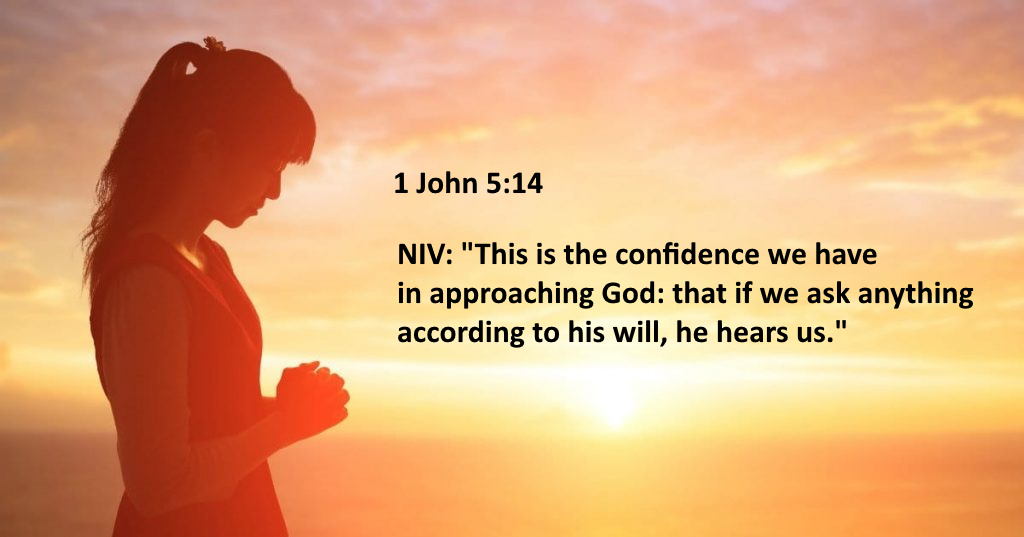
1 John 5:14, NIV: “This is the confidence we have in approaching God: that if we ask anything according to his will, he hears us.”

After emphasizing confidence in eternal life, John comments on confidence in prayer. The believer can know he or she has eternal life and know God hears their prayers. However, this verse specifies that getting a positive answer to prayer is based on asking “according to his will.” This phrase is used only two other times in the New Testament. In Luke 12:47, a parable is told about a servant who did not act “according to his [master’s] will” and received judgment. In Hebrews 2:4, the author mentions gifts of the Holy Spirit distributed “according to his will.”


Verses such as this clear up the common misconception that God promises to give us “absolutely anything” we ask for, no matter what. God is not a vending machine, or a robot. He acts according to His ways, not ours. He hears our prayers, but it should come as no surprise that He responds to those prayers according to His will.

1 Corinthians 12:8, NIV: “To one there is given through the Spirit a message of wisdom, to another a message of knowledge by means of the same Spirit,”

Paul has been describing to the Christians in Corinth what spiritual gifts are. In short, they are manifestations of the Holy Spirit. That is, they are abilities that go beyond normal human capacity in some specific way, even if the display of God’s power is not always obvious. Paul has shown that they are given to every Christian by God to be used for the common good of the church.

Now Paul begins to describe some of these specific gifts. This first list contains nine gifts, and it is not exhaustive. Other passages in the New Testament list additional spiritual gifts (Romans 12:6–8; Ephesians 4:11; 1 Peter 4:10–11).

Some groups of Christians believe this specific set of gifts, sometimes called the sign gifts or confirmation gifts, to have been given to Christians in the early church to demonstrate the power of God and confirm that the gospel was true. These groups typically believe God stopped giving these gifts after the church was established and the New Testament was published. The same group may or may not believe these gifts are given today sporadically and under special circumstances. Other groups of believers, such as Pentecostals and Charismatics believe these gifts are still distributed by the Holy Spirit regularly and throughout the church around the world.

Paul starts the list with two gifts of “utterance” or kinds of messages. He says again that both are given by the same Spirit, though they are slightly different. The first is the “utterance” or “word” or “message” of wisdom, depending on the translation. The second is the utterance of knowledge.

The word of wisdom involves the supernatural ability to offer insight into truth from God in a way that helps others. The word of knowledge might be understood as the ability to proclaim God’s revelation to those who need to hear it or to offer understanding of how it applies to specific areas of life.

1 Corinthians 12:9, NIV: “to another faith by the same Spirit, to another gifts of healing by that one Spirit,”

Paul is listing some of the gifts the Holy Spirit delivers to believers. Not every believer is given every gift. Paul wrote in the previous verse that one is given the utterance of wisdom, while another is given the utterance—or “message”—of knowledge.

Now he adds that one might be given the gift of faith, while another gifts of healing. In all cases, Paul’s emphasis is that these gifts are given by the same Holy Spirit of God. He is the source of each of them, and all the power behind them comes from God.

By definition, every born-again believer has faith in Christ and faith to believe God’s Word. The spiritual gift of faith, as narrowly implied here, seems to involve the ability to trust God with a confidence or certainty that is beyond the ability of other Christians. Some scholars suggest this gift is tied to the rest of the gifts in this list, including the gifts of healing.

The gifts of healing provide the supernatural ability for the person who possesses the gift to restore health or even to hold off death. This is not to be confused with the ability to practice the medical arts or sciences. Those with the gift of healing are empowered by the Holy Spirit to heal a specific ailment supernaturally, often immediately.

Acts 10:38, NLT: “And you know that God anointed Jesus of Nazareth with the Holy Spirit and with power. Then Jesus went around doing good and healing all who were oppressed by the devil, for God was with him.”

Notice that all 3 of the Holy Trinity are involved, God the Father, Jesus the Son and the Holy Spirit. If you are born again the same Holy Spirit is in you, the same Power of God is in you and you have the righteousness of Jesus.

 Throughout His ministry, Jesus blessed the vulnerable and held the powerful responsible (John 2:1–11, 13–16; Mark 10:13–16), He healed the demonically oppressed (Mark 1:23–26; 5:1–13; Matthew: 17:14–18), and brought the dead to life (Mark 5:39–43; John 11:38–44). Most importantly, not only was God with Him, He is God with us (Isaiah 7:14; Matthew 1:23).


In the previous verse, Peter described Jesus’ refusal to retaliate against those who mistreated Him. Jesus chose this path because He trusted the Father to be the just judge, to make all things right. Jesus suffered for doing good, without fighting back, so He could fulfill His purpose. Verse 24 describes exactly what that purpose was.

1 Peter 2:24, NLT: “He personally carried our sins in his body on the cross so that we can be dead to sin and live for what is right. By his wounds you are healed.”

If Jesus had not willingly endured unjust suffering, we would have remained lost in our sin. Instead, Jesus bore, or “carried,” our sins and physical suffering on the cross. He actually died in order to pay the penalty for our sinful actions. He became our substitute, dying the death we deserved. God, the one who judges justly (1 Peter 2:23) judged Christ for our sin in that moment, pouring out His wrath on His own Son to satisfy the payment for our sin. He endured suffering so we could die to sin. In that action, by God’s grace and through our faith in Christ, we have been freed. Believers are free from the price of our own sin, from the power of sin to poison our choices and sickness and disease. Now, thanks to Jesus’ suffering, Christians can live righteously. We don’t have to sin; we are free to make right choices that please and honor our God (1 Corinthians 10:13).

The verse ends by quoting Isaiah 53:5. As Christians, we have been healed from the penalty and power of our sin by Christ’s wounds, by His death in our place, by His suffering for our good. The wounds—the suffering—of Jesus are the means by which Christians are healed—not only forgiven by God for our sins but physical healing from sickness and disease.

Pastors Nathan and Salila Gonmei of Abundant Grace Church in Chiang Mai Thailand explain Biblical health and healing and how to walk in it in English and Thai languages in the 16 minute video below.