Guide to Trekking Doi Inthanon National Park

Trekking on the Highest Mountain in Thailand at Doi Inthanon National Park

The best in nature and culture Thailand has to offer

An incredible 2 day experience”
Rob, Vancouver, Canada
real Thailand -not made up for tourists” Christine, Madrid, Spain

When it gets too hot to stay in Chiangmai city, no worries, just go to Doi Inthanon National Park a short 90 kilometers away. Bring a jacket, believe it or not, you will need it. We load the pick-up truck and head to the highest mountain in Thailand at Doi Inthanon National Park. The park is very large with no public transportation so if you want to visit the park best to rent a motorbike or better yet take a 2 or 3 day tour or trek.

Before I tell you more about the park I need to mention that I speak Thai and live in Chiang Mai since 1989. I have visited the park hundreds of times through the years. Many in the park do not speak English, their are local guides available but only a few speak English.

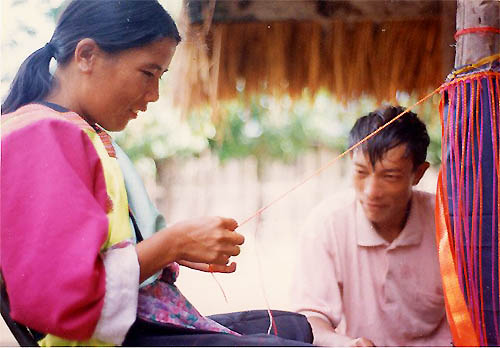
My suggestion if you do not speak Thai is to do the 1 or 2 night Home Stay at the home of a local Karen Hill Tribe English Speaking Guide who speaks perfect English. The guides village is away from the normal tourist areas in beautiful setting. As this is a private Home Stay with local Karen hill tribe guide, you will have lots of time to discuss with your guide the local hill tribe life and the surrounding forests. You will meet his family and partake in daily life. Your guide will also discuss with you the different trails and their difficulty and you can then decide which trail to hike and for how long. This can all be discussed with your guide once you arrive at the bungalows in the park. You can then work with your Karen guide picking and roasting coffee, feeding fish at the trout fish farm, learn weaving with a back strap loom, plant or harvest rice in the fields or hike in the forest for 2 to 6 hours with you guide. The itinerary can be changed to meet your desires.

WARNING: If going by motorbike DO NOT rent a automatic transmission motorbike. This is because when you go down the steep hills the automatic motorbike goes into natural. You will not have back pressure from the motor to slow you down and only the brakes will slow you down. Brakes may overheat and fail. Rent a automatic clutch motorbike so you can down shift gears to help slow you down. A Honda Dream or Wave works great.

Soon after entering the park gate, the road climbs steeply through a cutting before leveling out, passing the Doi Inthanon National Park Information Center, overlooking the Mae Klang river on the left. The road passes through open dry forest and after crossing over to the left bank, follows the course of the river, overlooking it. In the dry season, the leaves of the trees become yellow and red, before being shed.

As the road climbs gradually, an evergreen gallery forest begins developing along the banks of the river, supporting many tall and stately trees. Soaring birds of prey can sometimes be seen over the steep ridge on the north side of the road. The more level areas in the vicinity of the river are now cultivated and support small areas of orchard or vegetable gardens. Above Wachirathan waterfall, the road once again crosses over the Mae Klang River and continues to ascend the mountain, following the north bank. The surroundings change very abruptly in character, and pines predominate in many areas.

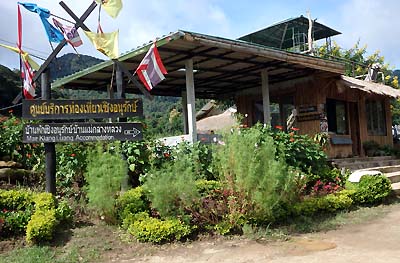
Mae Klang Luang village Doi Inthanon Thailand

The next area supports Hmong and Karen villages, there are many government offices and residential buildings, including the headquarters of the National Park and various highway and construction works. Here is where the campsites are but you first must check in at the Park Headquarters. There are also cabins for rent however most are rented well in advance. Here we are above 1500 meters and the temperature is like a beautiful spring day.


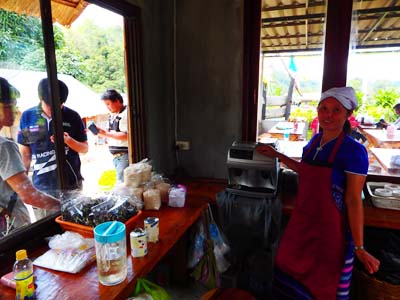
Time to find a camping spot. Its lunchtime, so we travel to the Karen hill tribe village area of Baan Mae Klang Luang at the 26 Kilometer road marker Here there are several restaurants and a coffee and waffle shop in a beautiful setting.

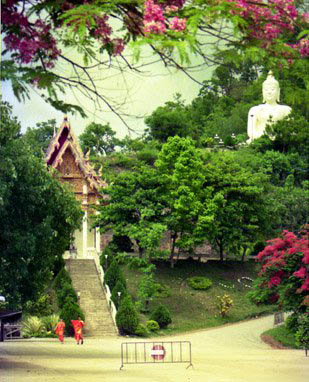
From here the road winds uphill sharply and past a park checkpoint. Just a little further is a mountain ridge with excellent vistas on both sides of the road. If the weather is clear, at one spot you can see the city of Chiang Mai on your right. Just a little further on your left is the twin Chedi dedicated to the King and Queen. These beautiful Thai structures are a must visit. You will need to walk up several flights of steps to reach them but well worth it.Next stop is the summit. Here we get out of our vehicle and walk up the steps to the shrine dedicated to the Lanna Thai King who first designated this area as a national park. Walk behind the shrine to a concrete pillar and stand on it. You are now on the highest point in Thailand.We departed Chiang Mai at 9 am it was already 35 degrees C. and started the short 1 1/2 hour drive to the park. We left Chiang Mai by highway 108 through Hang Dong and Sanpatong and then about one kilometer before Chom Tong turned right on highway 1009. There is a big sign in English stating “Doi Inthanon” where you turn so it’s easy to find. Continue 8 kilometers to where the road forks and then keep to the right where you will see the park entrance. The entrance fee is 300 baht and they have free maps and information for you that you will need. A copy of the park map can be seen online and might be a useful reference as you read this article.You need to know the park rules that levy stiff fines if broken (such as for picking flowers); these rules are written on the back of all the maps and brochures.A local guide is required for all trails in the park and available at the Gew Mae Pan trail . If you are caught on the trail without a local guide the fine is 2000 Thai baht each.https://www.youtube.com/embed/OQHxiWVtKUY?rel=0After getting all the information we needed we headed straight to Baan Mae Klang Luang at the 26 Kilometer road marker for accommodations reservations where we both noticed a thermometer and found it was a perfect 26 degrees C. We decided to spend our first night in a tent and second night in a bungalow. I wanted to do the Hill Tribe Home Stay but my wife wanted something more comfortable so we stayed in the bungalows. We made our reservations for the bungalow with All Thailand Experience a week ahead of our trip to the park. Since we were going to ride around the park the Coffee and Waffle shop kept our bags for us and we proceeded to the camping area next to a beautiful stream in a garden setting to pitch our tent. Here they have hot showers and toilets close by to use for free Tents can be rented for 200 baht and blankets at 20 baht each.Choice of several bungalows from rice field view to stream side. Each bungalow has 2 queen sized beds, hot shower and western style toilet. 3 bedroom bungalows available.Stream side bungalow at Baan Mae Klang LuangMae Klang Luang bungalow roomStream side bungalow Doi Inthanon National Park ThailandStream side bungalow at Doi Inthanoon National Park ThailandAfter putting up the tent we were getting hungry and headed back to see our friend and birding guide Grace and went to eat at a restaurant serving delicious Thai food at great prices near the hydroelectric plant. While having lunch we were told that a 7- man soccer match was being played this afternoon on the soccer field next to the restaurant on the Park Headquarters grounds. The match was between a Karen hill tribe village and a Hmong hill tribe village located in the park so we stayed and watched the action under the shade trees drinking ice-cold beer. We made plans to do some hiking on the Gew Mae Pan Trail near the Doi Inthanon summit (above 2000 meters tomorrow) so today was for relaxing, which I myself am very good at doing.Just before dark we ate our dinner, again at the bungalows at Baan Mae Klang Luang, got our things from the Coffee and Waffle Shop and went to our camp. In May there aren’t many people in the park so a secluded place to put our tent was easy to find. We built a nice campfire and I spent the evening reading while my wife did her crochet. The only sound was that of the crickets and with the smell of pine and clean fresh air drifting off to sleep was a total pleasure I haven’t experienced in many months while living in the crowded city. The next morning we awoke early and packed up the tent and returned to the Coffee and Waffle Shop for a great cup of coffee and delicious waffle and again he kept our bags for us. I checked the thermometer and it was a cool 18 degrees C.The bungalows have a Thai food restaurant, fresh coffee and waffle shop plus a general store for beer and snacks.
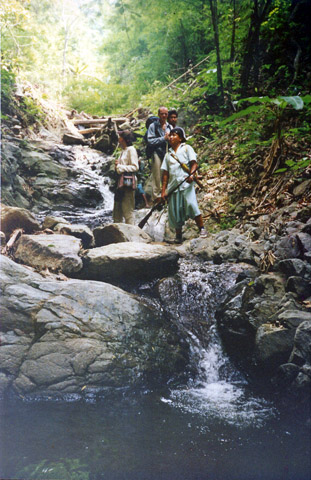
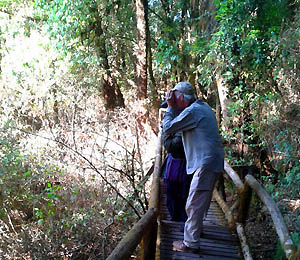
Waffle shop at Doi Inthanon National Park ThailandWaffle shop at Doi Inthanon National Park ThailandWaffle shop at Doi Inthanon National Park ThailandWaffle shop at Doi Inthanon National Park ThailandWe had our breakfast at the Coffee and Waffle Shop at Baan Mae Klang Luang headed toward the summit passing fruit and flower stands owned by Hmong Hilltribe people. Here we stopped to have a look and across the street were green houses filled with beautiful flowers. The growing of flowers is a Royal Project so the hill tribe people can live in harmony with the park’s conservation plans instead of doing their traditional slash and burn farming.The 2.5-kilometer Gew Mae Pan Trail begins about half a kilometer past the twin Chedis at kilometer marker 42. We decided to leave our vehicle at the Chedi and walk the horseshoe shaped trail to the end and return the same way. This turned out to be a good idea as the mountains were covered with mist and clouds and the view although beautiful was limited on our way out. On the way back the clouds had lifted and the view was spectacular.The trail begins through dense forest with lush ferns and moss covering the tree trunks. Wild orchids and colorful birds are plentiful. It’s uphill most of the way, crossing streams and climbing over and ducking under logs. The temperature is perfect for hiking and the sounds of the many birds and creeks are very enjoyable. After about an hour you come upon a clearing looking toward the west. When we arrived clouds were rushing up from the valley floor to meet us.The next portion of the trail is through dense forest again crossing several streams. The park has provided small bridges to make crossing the streams easy. The last part of the trail is through a lovely evergreen forest with pine trees much different and larger than those found at our campsite.We returned the way we came following the trail to the clearing and this time the clouds had lifted leaving a spectacular view of the valley floor and surrounding mountains. Two hawks were circling above, diving to the valley floor then lifting again on the air currents along the cliff edge, their screeching echoing through the canyon below.We spent a total of six hours on the trail and saw only two other people. They were Thai photographers doing a story for a nature magazine. We could have stayed longer but hunger was setting in so we returned to the restaurant at the Baan Mae Klang Bungalows.This evening was spent in our comfortable bungalow. We made reservations the day before. The bungalow has electricity and is equipped with a king size bed in the bedroom and a single bed with table and chairs on the porch. It has simple bathroom with shower and western style toilet.The next day we spent visiting the many waterfalls in the park. The first one was very close to our bungalow and actually two waterfalls named after the King and Queen and called Siriphum waterfalls. The next two waterfalls were also close together and the road getting there was a little difficult but worth the effort. We went just past the second check point at kilometer marker 38 and turned left toward Mae Chaem and traveled about 8 kilometers. Here there is a sign where you turn right and travel the dirt road for 2 kilometers to the ranger station. From there it’s a 500-meter walk to Mae Pan waterfall and 200 meters to Huai Luaeng waterfall.Forest hike at Doi Inthanon Nationap Park video
https://www.youtube.com/embed/Gg_l33pe3tw?rel=0Our last stop was on the way out of the park at Mae Ya waterfall. To get there you need to go back to Cham Tong and just before you get to highway 108 you will see the sign Mae Ya waterfall. Follow the signs for about 14 kilometers from here. There will be a checkpoint where they collect a 200 baht fee to enter. Just tell them you have been staying in the park and show them the receipt and they will let you in for free. This waterfall is great for photographs and over 250 meters tall. Try to go on a weekday, as the weekends are very crowded with Thais picnicking and swimming.We had a great time although we didn’t see everything such as Brichinda cave. We would also like to spend some time bird watching. The Park staff was a great help and very friendly and I would recommend this trip to anyone.Karen hill tribe villagers geting the rice fields ready for planting video
https://www.youtube.com/embed/tX4V1LICfU0?rel=0

Copyright & copy; 1997-2019 All Thailand Experiences. All rights reserved.

Please report technical problems to info@all-thailand-exp.com
This page was last modified on: 01/16/2020 05:33:16
All Thailand Experiences

Chiang Mai Thailand Night Safari

Night Safari is in fact a bit of a misnomer; it is also a beautiful place to visit during daylight hours, and since not all of the denizens of the park are nocturnal there are many exotic birds and animals to see as you traverse the meticulously maintained grounds.

On a tour of the safari park it soon becomes clear why the animals are so contented while out of their natural habitat. Young keepers charged with the animals’ welfare have already developed the strong bond of trust that is necessary to make the beasts at ease in their new surroundings. Speaking softly to each of their charges as they move among them in their cages or enclosures, these young people instill confidence and trust with every word or gesture.

The entrance to Chiangmai Night Safari features the Lanna village; a collection of impressive buildings of an Afro-Lanna fusion of architectural styles that house souvenir and handicraft shops: a food court, a photo-corner where visitors can have their picture taken with either a baby lion, tiger or bear-and this area boasts the country’s only “Fun Plaza – an airy terrace from where the delighted squeals of children can be heard as they run around in an attempt to avoid jets of water shooting upward at intervals from hidden spouts in the ground.

From here I decided to take the only walking trail of the three animal zones, the Jaguar Trail Zone; a 1.2 kilometre paved track that encircles the tranquil waters of the Swan Lake where spectacular musical fountain shows are staged day and night. Graceful black and white swans glide across the mirrored surface of the lake while a cheeky gibbon lopes around the shrubbery on a tiny, off-shore island, trying to attract the attention of my companion, Khun Prakaykaw-or Deaw, as she prefers to be known to her friends. Deaw is a young, public relations executive from Bangkok who came to work for the safari park and fell in love with Chiangmai, its people, her job, and yes-this mischievous gibbon. I have known public relations people who’ve tried to convince me that junk food was nutritious, but never one as knowledgeable and caring about her job. Deaw has a personal relationship with many of the park’s inhabitants, and more than a few run to greet her as she calls out their names as we pass their enclosures.

The park has three animal zones: the Jaguar Trail, which we chose to walk, the Savanna Safari Zone, where animals from the African savanna can be seen close-up at night from a 60-seater electric tram-or mini-train as it purrs past the more than 300 herbivores (not the back-packing vegetarians that haunt Chiangmai’s restaurants) or plant eating animals, such as Giraffes, Gorals, Wildebeests, Rhinoceroses, yaks and many others.

The Predator Prowl Zone, which has no connection whatsoever with Chiangmai’s Night Bazaar, is the carnivorous animal zone where the hairs on the back of your neck tend to rise. As your tram carries you, in total safety, within yards of some of the world’s most ferocious creatures you can’t help but feel the power, majesty and grace of such animals as lions, tigers, Asiatic Black bears, crocodiles, African hunting dogs, and the elegant impala.

But back to the Jaguar Trail where Deaw is introducing me to its denizens: Camels chase one another around a spacious corral, while a pair of Llamas in an adjacent enclosure chomp away on the abundant vegetation. We pass a little oasis where a giant tortoise from the Seychelles is trying to explain to a large, fluffy rabbit the moral of the story about the turtle and the hare. You don’t know? Ask your teacher; that’s what he or she is grossly underpaid to know!

There are some 400 animals from 50 species living along this route as it meanders around the Swan Lake amid immaculately landscaped gardens. I am aware that there are those who are opposed to the keeping of wild animals in captivity, and those who find it quite acceptable. These are not the pages in which such a debate should rage. Suffice it to say that the hyena I met on the Jaguar Trail was laughing.

Coming to a large, caged enclosure, I was delighted to get my first glimpse of a pair of rare white tigers. Zhaojin and his mate Lizhen were presented to Thailand by the Xiangiang Safari Park in southern China’s Guangzhou, or Canton as it once was known. All manner of exotic beasts can be seen along the trail. Two magnificent jaguars lazed in the branches of a tree (the last time I saw two Jags up a tree was after a party in London’s St. John’s Wood district) But I digress. There were porcupines, otters, monkeys, a walk-through aviary, black leopards, and the only ring-tailed lemur in the country! I also noticed two pigmy hippos; or for the politically correct pedants out there, a pair of vertically challenged hippopotami.

After dark there are lazer light shows shining on dancing water foutains to music in the center of the lake. A great way to end your day at the Chiang Mai Night safari.

OLYMPUS DIGITAL CAMERA

There is a campsite and student accommodation; conference facilities and restaurants. Among the trees lies the Chiangmai Night Safari Resort; a collection of elegant bungalows, tastefully furnished and offering guests breathtaking views over Chiangmai. One can even retire to a four-poster bed and fall asleep to the night sounds of the jungle animals nearby. The resort is managed by Khun Pavit, who ensures guests of a most memorable stay among the forests of the Doi Suthep national park, of which the Chiangmai Night Safari and Resort is an integral part.

The safari park is a relaxing and educational facility where families can spend the day, or night, learning first hand about the habits of national, regional and international animal life.

Please use the form below to contact us for more information or reservations.

Go back

Your message has been sent

Warning
Warning
Warning
Warning.

About All Thailand Experiences

About our Thailand Tour Company
All Thailand Experiences
and Founder Mr. Randy Gaudet


I first came to Thailand in 1968 while in the U.S. Air Force stationed in Udorn Thani in east Thailand. I was stationed here for 2 years before being stationed in Japan and Korea. I Loved Thailand so much I cried when I left and promised myself I would return.

In 1989 I had the offer to volunteer at Payap University in Chiang Mai Thailand for 2 years and accepted. Here I was supervisor of the communications department at Christian Communication Institute at the university where I supervised installing and training staff of the audio and video studio at CCI. While at the university I took the opportunity to take Thai language and Lanna Thai (North Thailand) history, culture and music classes.

Wat Thaton Temple
Bamboo school

After my commitment was finsihed at Payap University I lived in a remote area of north Thailand at Wat Thaton temple in the town of Thaton on the Myanmar border for more than 3 years. I taught English to Monks, novices, high school students, the Thai Army, local and tourist police. I also did hill tribe programs by taking a small number of tourists to hill tribe villages to spend the evening. All the money for the trek went to the villagers. I bought clothes for the children, medicines and blankets for the families I paid the villagers to build a bamboo schoolhouse and paid a teacher to teach Thai at the school who could speak their language. I taught them how to dispose of waste properly, keep the children and village clean and to use spoons instead of their fingers when eating which was a big source of their health problems. I provided seeds and Logan and lychee fruit trees for planting.

Randy Gaudet with village teacher

This was fine until I left the temple then the school stopped and the health problems returned. I talked with the Abbot of the temple and he now has a school for the children at the temple. He has a nurse looking after the children and takes those to the clinics that have problems.

While I was there I help start a guest home where travelers could stay in a Lisu hill tribe village and go trekking in the jungle and visit primitive hill tribe villages in the area. This was not easy, as the villages we visited didn’t want visitors as they wanted to maintain their lifestyle and culture. They have seen other villages who accept tourist turn into a village without harmony and lost their culture. These villagers were farmers and didn’t want to look at tourism as a source of income. I understood the problem as I have seen what a tour operator can do to a village. To them money is first and they don’t care about the hill tribe people or their way of life.

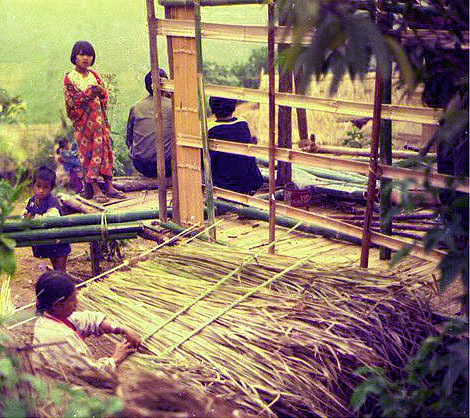
Building a Lahi Home

I stayed in these villages and met with the village headmen many times. I learned about their culture, way of life, religion, and do’s and don’ts. We then came up with a plan that worked out well for the villagers and our clients.

We can only stay in a village 1 night per week and no more than 6 persons. There are 35 villages in this area so we always have a village to take our clients. Nothing is allowed to be given to a villager directly by the visitor. It must be given to the guide who then gives it to the villager. No candy for the children and no photographs without permission. No money is allowed to be given for a photograph. The guide must be from the local area and must also be hill tribe and speak the language of the village.

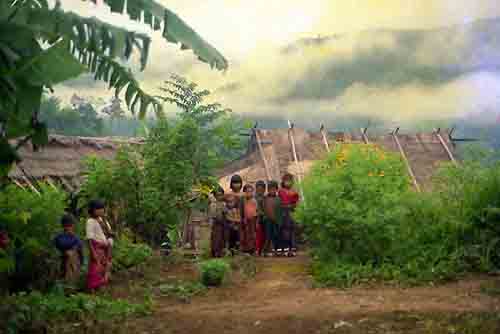
Lahu Hill Tribe Children

I then trained 3 hill tribe men from the local area who speak English to be our guides. None of these men drink or smoke and their families are very well respected by all the villages.

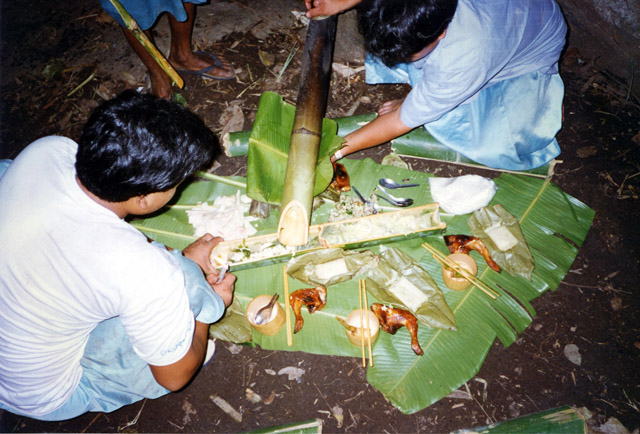
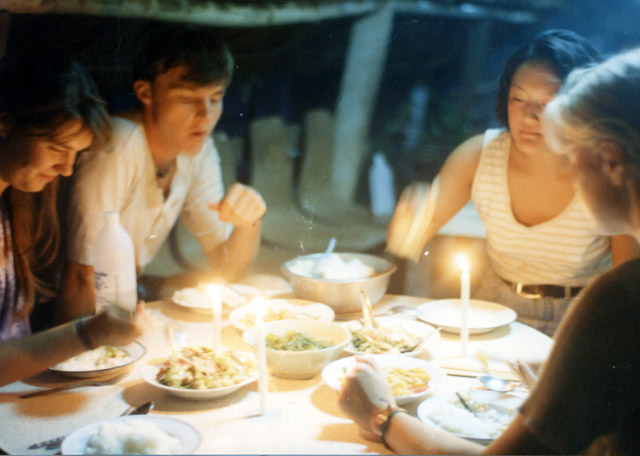
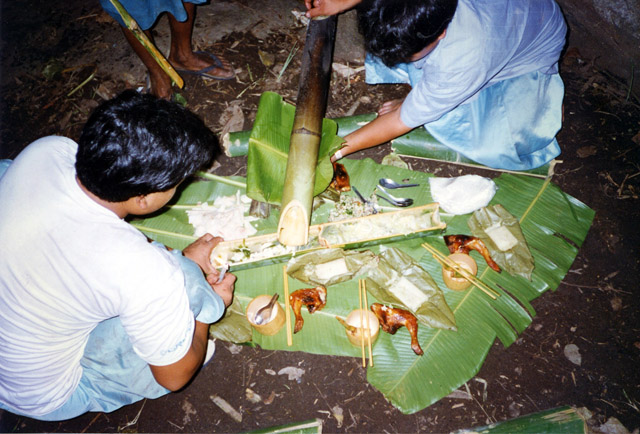
Dinner in the jungle

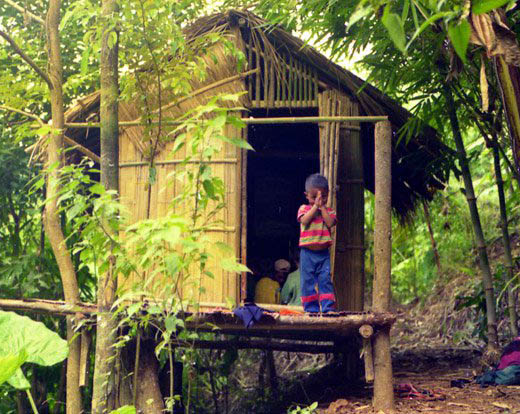
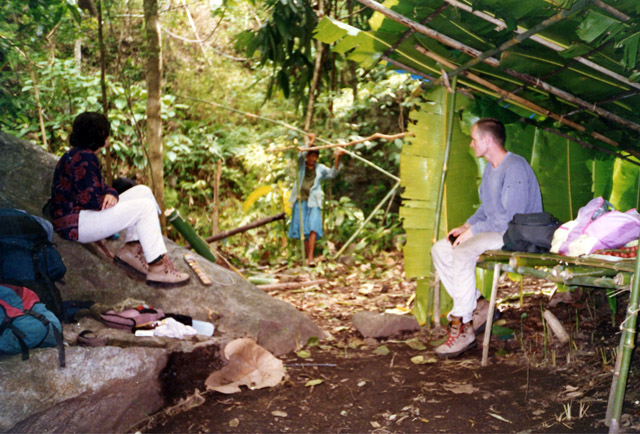
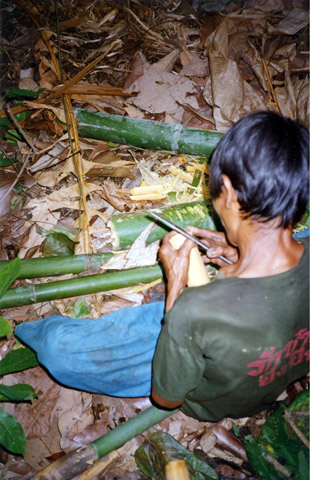
For the Jungle portion of the trek I had to teach the guides to use a different trails so it could grow back. They make a hut out of bamboo and banana leaves for sleeping and I taught them not to clear cut and not to return to an area for at least two months. No more hunting of birds or wild animals.

Without the local culture we would not be able to give our clients the experience they are looking for. We also encourage our clients in helping the local people we visit.

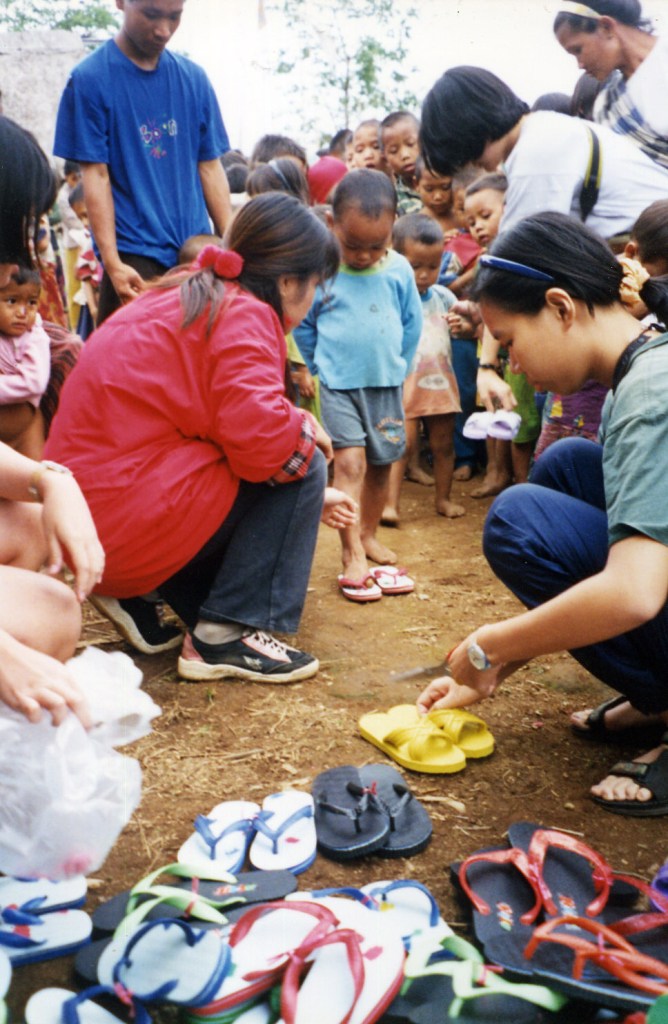
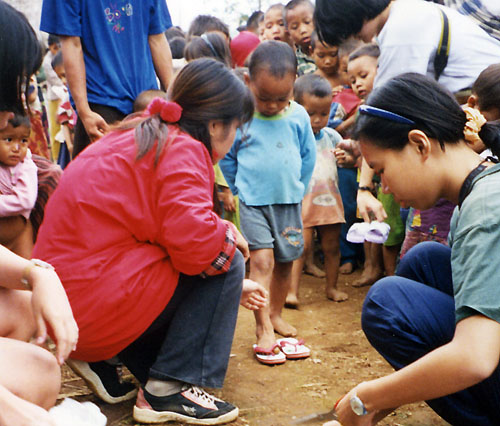
Giving Shoes to Needy Children

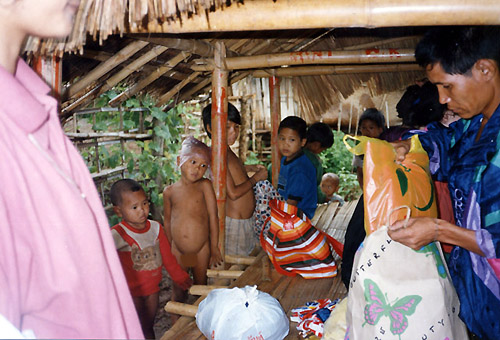
Most of our clients want to help the poor villagers that they visit. We take them to a market here in Chiangmai to buy shirts and pants for the children before we visit. Shirts or pants can be purchased for a little as $1 USD, blankets for about $3 USD. We have had groups including one from Singapore who stayed at 3 different hill tribe villages. They brought medicines, blankets and clothes. They repaired playground equipment and repainted the school. We follow God’s word in Isiah 58: 7 “Is it not to share your bread with the hungry, And that you bring to your house the poor who are cast out; When you see the naked, that you cover him, And not hide yourself from your own flesh?”.

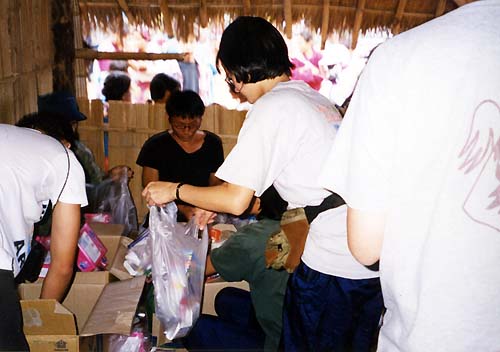
Giving supplies to poor villagers

Our company buys clothes and blankets every year when cold season arrives to give to needy villagers. We also help orphan and abandoned children in 3 different children homes here in north Thailand.

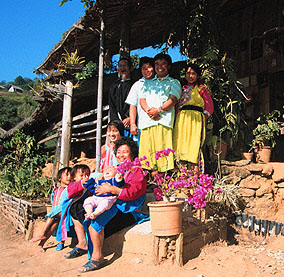
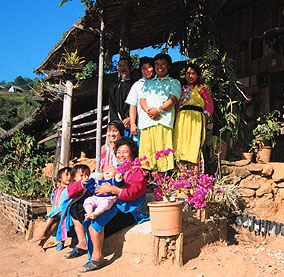
Lisu Hill Tribe Guides with Family at Guest Home

We have trained and employed hill tribe people and families to be guides for us and host our clients. We helped Asa, a Lisu Hill Tribe man who has the guest home, photo right, get started and now has a very successful business. He handles all our treks for us along with other guides and porters he has hired. He used to get only 50 baht per day per group and now gets more than 1800 baht per person for taking our clients. We have a loving relationship with all the people that work with us and those we visit. To us they are family and our clients notice this and is mentioned often.

There are hundreds of tour operators in Thailand and most take their clients to the same areas and places. Most of these areas have more tourists than Thai people so there is no cultural experience to speak of. We won’t do that to our clients. We want them to enjoy a wonderful experience they will remember for a lifetime.

Taking tractor ti Rice fields

We specialize in quality and service with as much interaction with nature and culture as possible. I have been living in Thailand since 1989. I have traveled extensively throughout the Kingdom and wanted to share my wonderful experiences of Thailand with others. I talked with many travelers here in Thailand and saw a need to take visitors away from the normal tourist areas filled with large tour buses and groups. The biggest complaint I heard from visitors is “there is no real Thai culture”. “Everything is staged for the tourists”. This is because they keep following each other around using their guide books.

It took about 2 years of research to find the areas that were safe and could handle visitors. I spoke with village headmen, temple Monks, Hill Tribe villagers, National Park officials and local bird experts. I then had to train a staff that would take care of our clients with excellent service and provide correct information about Thai and hilltribe culture, Thai food, Buddhism, birds of Thailand, etc.

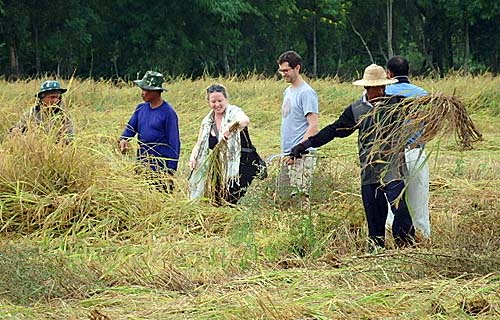
Harvesting Rice

All our guides are registered with the Tourism Authority but that is not enough. Our training program is by far the best in the Kingdom. They must not only study the subjects but also go to each area, town or village and learn first hand about the people their culture, birds and animals of the region along with any festival or event and when it takes place.

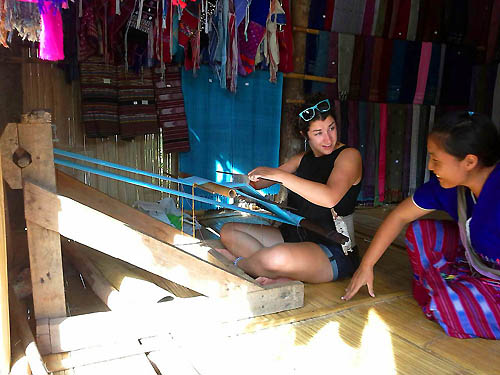
Learning to Weave

Our main and only goal is to provide a great experience our clients could not enjoy with any other guide or tour operator. From the comments in our “Guest Book” at our web site, email from previous clients and the large number of referrals we are meeting our goal. What we all enjoy is when our clients finish their tour they tell us “It was one of the best holidays we ever had and thank you so much”. “I will surely recommend your services to others”.

To us conservation is more than the natural environment. We take many clients to very cultural sensitive hill tribe villages. This is a very difficult balance of very different cultures but can be maintained. We follow 4 basic rules to maintain harmony in the villages and help the environment

Since we do only private custom excursions we want to know the needs of our clients. We then email back to them what we will and will not do for them. Most of our clients know only what they read from agent brochures about what to do in Thailand and these tours might not be the best for them. We explain to them that we do not go to these places and why.

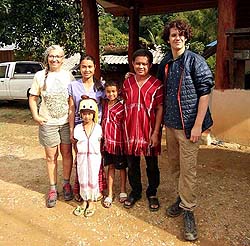
Clients and Karen Hill Tribe Family during Home Stay

We send several email messages back and forth asking and answering questions before an itinerary is approved. We then do many follow up email messages about what they will experience, cultural do’s and don’ts, and answer any question they may have. By the time they arrive they have an excellent knowledge of all aspects of their journey with us.

Many of our clients are families and have special needs. We ask many questions about the children such as favorite foods and their interests as we want them to enjoy their holiday also. We want to know if anyone in the group is having a birthday or anniversary while they are with us so that we can make their day special.

Once our clients arrive we are on call 24 hours a day for them. They can telephone us anytime about any questions they may have. From the time they arrive at the airport to the time of departure back to their home we are there for them.

After they return home most of our clients stay in contact with us. Not only do they thank us for a wonderful time but they ask about the people they made friends with while with us. I am happy to say we have made many good friends from all over the world with those who have been with us.

Swimming at Waterfalls

I have talked with other tour operators and the Tourism Authority of Thailand about being responsible in maintaining hill tribe culture. No one seams to care, as money is the bottom line. Exploitation of the hill tribe people and their way of life are common here. I have been able to give lectures at guide classes for the TAT. I try to teach them about being responsible for maintaining the hill tribe culture. After all it is the guides who are in contact with the villagers and clients not the tour operators.

Randy Gaudet
Founder/Director
All Thailand Experiences

Thailand Christian Missions, Churches and Covid-19.

All Thailand Experiences Christian Mission

All Thailand Experiences changing lives in Thailand for 30 years.

Changing lives in Thailand with the Grace of Christ

Hello again, I’m Randy Gaudet, founder and director of All Thailand Experiences. Those who have read my profile know how I first came to Thailand and my association with missions and churches since 1989. I am now staying in Laos and have been here since Feb. 2020. The last tour we had was early Feb. last year so we have completely ran out of funds.

I came here to Savannakhet Laos in Feb. 2020 to get a new Thailand visa when they closed the border because of Covid-19. At that time my mission objective was to move to Muang Gnam 20 kilometers east of Thaton in Mae AI district of Chiang Mai. My good friend Pastor Daom who I have known for more than 25 years asked me to move there and help him in his ministry.

Pastor Daom is Karen hill tribe. He speaks all the hill tribe languages for the area plus reads, writes and speaks English perfectly. He was trained as a Baptist minister more than 30 years ago and now wants to study about God’s Grace and preach the good news of the Holy Trinity to his congregation. A Christian group from Korea just built him a new church that can hold more than 100 persons but he only has about 12 members. He wants me to teach him more about God’s Grace and how to reach more persons for Christ.

There are about 35 different villages in the area and they all know me as I have tours and helped several villages in this area. We planned to have Sunday evening church service with a meal. We will show videos of Abundant Grace Church service (scroll down to see videos) and give out New Testament written in Thai.

How the All Thailand Experiences Mission started.

After my first mission trip to Thailand from 1989 to 1991 the Lord placed upon my heart to help the needy and orphans in Thailand. At that time my position was audio and video supervisor at Christian Communication Institute, Payap University in Chiang Mai Thailand. I traveled all over north Thailand taking video of baptisms, church events, Christian events, revivals, orphanage homes, etc.

I attended many church services from well-established churches in big cities to small hill tribe village bamboo churches. I met and had conversations with the church pastors several times, Christian mission leaders, Christian organization representatives big and small. What I saw, heard, was told and experienced to me did not represent the kingdom of God at all. What I felt in my heart was these pastors and missionaries were not in Love with God. To me it seemed for them it was just a job. Never did I hear any new covenant teaching or preaching.

Thailand is one of the most unsaved areas of the world. Less than 3% of the population in Thailand professes faith in Christ although Christian missionaries have been visiting since1518.  These populations thrive on Buddhism, which denies a personal God, promotes benevolent works, and emphasizes reason and enlightenment as a means to salvation. Spirit worship and traditional religion have taken an enormous toll on the spiritual well-being of the Thai people, promoting a culture of fear and power. , the majority of the Thai people feel that to be truly Thai means to be Buddhist. Consequently when someone becomes a Christian, or embraces another religion, he usually experiences considerable family pressure and village opposition

The main problem at the time was most pastors and missionaries in Thailand preach the Law and not Grace. They are teaching fear and God’s wrath rather than Love and Grace because of Jesus Christ. Who wants to receive Christ and then fear God’s wrath and trying to make God happy day after day by following an impossible law? Teaching legalism does not work.

One example is I was visiting a large Christian orphanage home for their church service one Sunday near Chiang Mai. They had a visiting missionary there from the Philippines who were preaching in English and a Thai pastor was translating. He was telling these young children that God will punish them if they break the law of the commandments.  I was in shock as he shouted the commandments at the children from the pulpit.

After the service I was invited to eat lunch with the staff where I confronted the missionary about his preaching.  Using the bible I tried to show him that we are now under Grace not the law because of Jesus. He then gave me a mouth full if insults telling me I don’t know anything.

The pastor who is also the caretaker of the orphanage walked me to my vehicle and told me I was not welcome to return any more. He told me the missionary who preached that day is from a church in the Philippines that donates lots of money to the orphanage so he has to let him preach and doesn’t want me there anymore. Oh, OK?

Most churches that I visited back then were more like going to a funeral instead of rejoicing, praising God and listening to the good news of the Gospel. The old hymns of the sweet by and by or the glorious Heaven are being sung in Thai. Preachers are telling their congregation how their suffering and troubles are because they are carrying their cross for Jesus and God is responsible for both the good and bad in their lives, so sad. Thais are spiritual people. If you explain the Holy Spirit, Grace, Jesus resurrection and why to them using scripture they will want to know more.

This is not what I expected I thought people were going to accept Jesus Christ because of the good news of Grace and Love, instead the old covenant law was being taught and that Grace was not available to you if you break the law. I prayed about all this and asked God to lead me and the Holy Spirit to show me on how I can reach these people into God’s peace, love and grace. I was so discouraged I prayed about it and the Holy Spirit led me back home to Texas after 2 years with CCI was finished although they wanted me to stay longer. At the time I didn’t know the Lord would send me back to Thailand. This time to spread the Good News of the Holy Trinity, Love and Grace because of Jesus Christ and to tell Christians they are free from the Law, sin and death.

While in Texas I had a job working at a ranch. I lived in a small trailer by myself and had a truck I could use whenever I needed. When not working I spent most of my time at our church and studying the bible. I had many conversations with my pastor and deacon about me returning to Thailand to continue my mission. I attend a spirit filled church that teaches the Grace of God through Jesus Christ and the Holy Spirit so they understood my concerns about some of the Christian churches and missions in Thailand.

I wanted to start my own mission but to do that I needed support. My pastor and other church pastors I approached for support told me I need a degree in theology plus mission training which would take at least 3 years and cost money I did not have. I then prayed for months for the Holy Spirit to show me a way to do my mission. A few months later I walked into church for Wednesday night service and bible study and my pastor took me aside with one of the deacons. They told me “Do tours in Thailand, this will support you and your mission.”

For the next couple of months I looked at doing tours in Thailand. I had worked with a river cruise company here in Texas for several years just before my mission to Thailand in 1989. We started with 1 small deck boat that held 6 persons and in three years grew the river cruise to hundreds of tourists a day with 2 boats holding 70 person each. I worked every position from boat captain to guide and promotion and marketing so I had the experience.

About six months later with prayer and enough money to last about 1 month in Thailand, a visa and a 1 way ticket I returned to Chiang Mai Thailand in May of 1992. While at Payap University 2 years earlier I learned the Thai language so I could travel anywhere and speak with anyone in the Thai Kingdom. I rented a motorbike for a month and traveled all around north Thailand visiting and staying in small towns and remote villages. If there was a road my motorbike could ride on I took it.

One of my stops was in the village of Thaton where I visited Wat Thaton Buddhist temple on top of a mountain which has spectacular views of the Me Kok River and the Fang valley below. While enjoying the view a well-dressed Thai gentleman about 35 years old came up to me and introduced himself in English as the secretary for the temple.  He asked me a few questions and I answered him in Thai about my history living in Thailand. He then asked me if I could teach English at the temple and that they would pay me 4000 Thai baht a month plus food and a bungalow to live in.

Wat Thaton Temple
Wat Thaton Temple

I told him I was a Christian and not a Buddhist. He answered that’s OK. I then said I will let him know in about a week. I want back to Chiang Mai and prayed about it. I called my pastor in Texas and asked him what I should do. He said if God is calling me to go ten go. I was also almost out of money so I had to do something. A week later I took the bus to Thaton and  wound up saying there for more than 2 years.

 While at the temple I taught English to Monks, novices, high school students, the Thai Army, local and tourist police. I also did hill tribe programs by taking a small number of tourists to hill tribe villages to spend the evening. All the money for the trek went to the villagers. I bought clothes for the children, medicines and blankets for the families. I paid the villagers to build a bamboo schoolhouse and paid a teacher to teach Thai at the school who could speak their language. 

. While I was there I help start a guest home where travelers could stay in a Lisu hill tribe village and go trekking in the jungle and visit primitive hill tribe villages in the area. This was not easy, as the villages we visited didn’t want visitors as they wanted to maintain their lifestyle and culture. They have seen other villages who accept tourist turn into a village without harmony and lost their culture. These villagers were farmers and didn’t want to look at tourism as a source of income.

I understood the problem as I have seen what a tour operator can do to a village. To them money is first and they don’t care about the hill tribe people or their way of life.

I stayed in these villages and met with the village headmen many times. I learned about their culture, way of life, religion, and do’s and don’ts. We then came up with a plan that worked out well for the villagers and our clients.

I had to follow God’s word in Isaiah 58: 7 “Is it not to share your bread with the hungry, And that you bring to your house the poor who are cast out; When you see the naked, that you cover him, And not hide yourself from your own flesh?”

As I was helping these villagers one question kept coming up. The villagers kept asking me “Who is your spirit?”  Now I had to be careful as the temple where I was staying at and was paying me told me do not try to convert villagers to Christianity. I told the villagers a little about the Holy Spirit and Jesus but I could not speak their hill tribe languages. What I did was telephone a hill tribe pastor working and living in Chiang Mai. I told him about the village and he would send a hill tribe pastor to their village to explain to them about God and Jesus I had to stay out of the evangelism process however this was working out well.

I was able to use the computer at the temple so I bought the URL All Thailand Experiences.com. Taught myself the HTM language so I could make my own web site. I made the web site, put it on line and now I could do tours to help those in need and orphan children.

For the tours I was conducting we can only stay in a village 1 night per week and no more than 6 persons. There are 35 villages in this area so we always have a village to take our clients. Nothing is allowed to be given to a villager directly by the visitor. It must be given to the guide who then gives it to the villager. No candy for the children and no photographs without permission. No money is allowed to be given for a photograph. The guide must be from the local area and must also be hill tribe and speak the language of the village.

I then trained 3 hill tribe men from the local area who speak English to be our guides. None of these men drink or smoke and their families are very well respected by all the villages. For the Jungle portion of the trek I had to teach the guides to use a different trails so it could grow back. They make a hut out of bamboo and banana leaves for sleeping and I taught them not to clear cut and not to return to an area for at least two months. No more hunting of birds or wild animals.

Without the local culture we would not be able to give our clients the experience they are looking for. We also encourage our clients in helping the local people we visit.

Many of our clients want to help the poor villagers that they visit. We take them to a market here in Chiang Mai to buy shirts and pants for the children before we visit. Shirts or pants can be purchased for a little as $1 USD, blankets for about $3 USD. We have had groups including one from Singapore who stayed at 3 different hill tribe villages. They brought medicines, blankets and clothes. They repaired playground equipment and repainted the school.

Everything I set up in the Thaton area was doing well including churches being built in Lahu and Akha hill tribe villages that we help and visit. The hill tribe speaking pastors from Chiang Mai and Chiang Rai and now preaching in the villages and training new pastors so I moved back to Chiang Mai in 1996.

I then concentrated on Doi Inthanon National Park where there are 7 hill tribe villages both Karen and Hmong. Here I trained 2 guides for trekking and home stay and 1 for bird watching.  I helpa1 family build a coffee and waffle  shop. I loaned them the money then designed the shop, purchased the equipment and make everything. 2 years later they paid me back. The real good news is there is a church in their village and they accepted the Lord and were baptized.

At the same time I was trying to reach the lost in Chiang Mai by talking about the Lord Jesus and giving free new testaments in Thai and English that were available from Payap University. I would give them my phone number so that if they needed anything or more information to call me. No one ever called me but I prayed that someone was touched by the Lord while reading their new testament I gave them.

All this was about to change in about 2005 mainly because of two new churches in the Chiang Mai Area that were and still are growing rapidly.

I heard about a church that was meeting at a hotel in Chiang Mai so one Sunday I decided to attend. I went early so I could meet the pastor. The pastor’s name is Jonathan and Judy Vickers from Australia and the church is House of Praise. Talking with Jonathan he also had a mission called Christian Outreach Center and Haven Children’s Homes.

I settled in for the service and was blown away. The worship music was upbeat at times with modern songs. The preaching was about the Grace of God using scripture with examples of how God’s Love can change our life in everyday circumstances. You could feel the presence of the Holy Spirit during worship. Praise God I found a church that I could take people to and receive blessing. Several locals that I brought to House of Praise Church excepted Jesus as their Lord and Savior and was Baptized including a family of 5. Praise God

House of Praise had a 10 AM service in English then a 1 PM Thai service in the afternoon. They were having a problem with the sound during service so I volunteered my engineering service to help every Sunday. When they purchased their new church building about a year later I gave advice in what sound equipment to purchase and I helped install it. I also taught the Thai staff n how to work the sound system. After 3 months or so my help was not needed any longer.

While talking to Pastor Jonathan I learned a lot about Havens Home for children. I asked him if they needed anything and he said always and whatever I good give would be greatly appreciated and Blessed. A week later I loaded my pick up with everything from meet to milk, vegetables to cookies and took them to Havens Homes. actually they had 2 homes close together, one for the guys and one for the girls. Every time our company, All Thailand Experiences, was making money we would telephone the care takers of the Haven Homes which were 2 couples with children and ask what they needed and we would supply whatever they needed when we could.

It was about 3 years later I heard of another new church that was meeting at a hotel in Chiang Mai every Sunday at 10 AM called Abundant Grace Church. The big difference was the service was in English and Thai at the same Time. I waited outside the meeting room as the doors were closed and was very surprised on how many Thai people were showing up and some young missionaries. Looking around I saw they had a room for the children’s church.

They opened the doors and I walked in and was greeted by very friendly locals handing out communion cups and crackers. The room was large and could hold at least 300 or so persons. There was a large projector screen on the back of the stage and 2 large screen monitor on the sides of the room. Everyone will be able to see the stage no matter where they sit.

The praise and worship music during the service was modern with some upbeat songs and some songs the worship team wrote by themselves. The team would go through the songs in English and Thai and the words were put on the screens. The preaching was in English and Thai. The pastor Nathan Gonmei would preach a sentence in English then his wife Salila would say the sentence in Thai. They preached with excitement and vigor with shouts of Amen from the congregation. Now this is a spirit filled church. This is the church I belong to today.

We were blessed by Stephanie and Gary sellers who did a bird watching tour with us and wanted to help. They provided new testaments in Thai and English to Abundant Grace Church to give out. Now new converts and those wanting to know more about Jesus Christ can get a New Testament free. Today Abundant Grace Church has campuses in Chiang, Mai, Chiang Rai, Bangkok  and Nakon Sawan. Stephanie and Gary also help me financially at times when needed. I am so blessed knowing them.

I am writing this as we need your temporary help until the border to Thailand is open again and tourists start returning. We have gone through bird flu, SCARS, Tsunami, riots, coups in the past here in Thailand and never needed help. Covid-19 has gone on now for about 16 months and no mission without some financial support can last.
I am asking to receive $500 USD a month so I can stay in Laos until the border to Thailand opens, tourists can return to Thailand and I can resume the mission given to me by God. We already have several clients that want to go bird watching with us at All Thailand Experiences in Feb. 2022 and others just waiting to book other tours with us when they can come.

Five examples and teachings from the Old and New Testaments about the validity of God’s ministers being supported by others:

  1. The example of the Levites (Numbers 18:24)- The Jews gave their tithe to the priests for support.
  2. The example of Jesus (Luke 8:2,3)- Many people supported Jesus and the disciples.
  3. The teaching of Jesus (Mt. 10:9,10)- A Kingdom worker is worthy of his support.
  4. The example of Paul (Acts 18:4,5)- He stopped tentmaking to preach full time on support.
  5. The teaching of Paul (1 Cor. 9:1-18)- He had the right to be supported by the churches.

If the Lord is touching your heart and His Holy Spirit is guiding you to give pleaee use the form below to contact me. Please keep me in your prayers and God Bless you. with Jesus Love Randy Gaudet

Go back

Your message has been sent

Warning
Warning
Warning
Warning.

God Bless,

Randy Gaudet

About All Thailand Experiences

About our Thailand Tour Company
All Thailand Experiences
and Founder Mr. Randy Gaudet


I first came to Thailand in 1968 while in the U.S. Air Force stationed in Udorn Thani in east Thailand. I was stationed here for 2 years before being stationed in Japan and Korea. I Loved Thailand so much I cried when I left and promised myself I would return.

In 1989 I had the offer to volunteer at Payap University in Chiang Mai Thailand for 2 years and accepted. Here I was supervisor of the communications department at Christian Communication Institute at the university where I supervised installing and training staff of the audio and video studio at CCI. While at the university I took the opportunity to take Thai language and Lanna Thai (North Thailand) history, culture and music classes.

Wat Thaton Temple
Bamboo school

After my commitment was finsihed at Payap University I lived in a remote area of north Thailand at Wat Thaton temple in the town of Thaton on the Myanmar border for more than 3 years. I taught English to Monks, novices, high school students, the Thai Army, local and tourist police. I also did hill tribe programs by taking a small number of tourists to hill tribe villages to spend the evening. All the money for the trek went to the villagers. I bought clothes for the children, medicines and blankets for the families I paid the villagers to build a bamboo schoolhouse and paid a teacher to teach Thai at the school who could speak their language. I taught them how to dispose of waste properly, keep the children and village clean and to use spoons instead of their fingers when eating which was a big source of their health problems. I provided seeds and Logan and lychee fruit trees for planting.

Randy Gaudet with village teacher

This was fine until I left the temple then the school stopped and the health problems returned. I talked with the Abbot of the temple and he now has a school for the children at the temple. He has a nurse looking after the children and takes those to the clinics that have problems.

While I was there I help start a guest home where travelers could stay in a Lisu hill tribe village and go trekking in the jungle and visit primitive hill tribe villages in the area. This was not easy, as the villages we visited didn’t want visitors as they wanted to maintain their lifestyle and culture. They have seen other villages who accept tourist turn into a village without harmony and lost their culture. These villagers were farmers and didn’t want to look at tourism as a source of income. I understood the problem as I have seen what a tour operator can do to a village. To them money is first and they don’t care about the hill tribe people or their way of life.

Building a Lahi Home

I stayed in these villages and met with the village headmen many times. I learned about their culture, way of life, religion, and do’s and don’ts. We then came up with a plan that worked out well for the villagers and our clients.

We can only stay in a village 1 night per week and no more than 6 persons. There are 35 villages in this area so we always have a village to take our clients. Nothing is allowed to be given to a villager directly by the visitor. It must be given to the guide who then gives it to the villager. No candy for the children and no photographs without permission. No money is allowed to be given for a photograph. The guide must be from the local area and must also be hill tribe and speak the language of the village.
Lahu Hill Tribe Children

I then trained 3 hill tribe men from the local area who speak English to be our guides. None of these men drink or smoke and their families are very well respected by all the villages.

Dinner in the jungle

For the Jungle portion of the trek I had to teach the guides to use a different trails so it could grow back. They make a hut out of bamboo and banana leaves for sleeping and I taught them not to clear cut and not to return to an area for at least two months. No more hunting of birds or wild animals.

Without the local culture we would not be able to give our clients the experience they are looking for. We also encourage our clients in helping the local people we visit.

Giving Shoes to Needy Children

Most of our clients want to help the poor villagers that they visit. We take them to a market here in Chiangmai to buy shirts and pants for the children before we visit. Shirts or pants can be purchased for a little as $1 USD, blankets for about $3 USD. We have had groups including one from Singapore who stayed at 3 different hill tribe villages. They brought medicines, blankets and clothes. They repaired playground equipment and repainted the school. We follow God’s word in Isiah 58: 7 “Is it not to share your bread with the hungry, And that you bring to your house the poor who are cast out; When you see the naked, that you cover him, And not hide yourself from your own flesh?”.

Giving supplies to poor villagers

Our company buys clothes and blankets every year when cold season arrives to give to needy villagers. We also help orphan and abandoned children in 3 different children homes here in north Thailand.

Lisu Hill Tribe Guides with Family at Guest Home

We have trained and employed hill tribe people and families to be guides for us and host our clients. We helped Asa, a Lisu Hill Tribe man who has the guest home, photo right, get started and now has a very successful business. He handles all our treks for us along with other guides and porters he has hired. He used to get only 50 baht per day per group and now gets more than 1800 baht per person for taking our clients. We have a loving relationship with all the people that work with us and those we visit. To us they are family and our clients notice this and is mentioned often.

There are hundreds of tour operators in Thailand and most take their clients to the same areas and places. Most of these areas have more tourists than Thai people so there is no cultural experience to speak of. We won’t do that to our clients. We want them to enjoy a wonderful experience they will remember for a lifetime.

Taking tractor ti Rice fields

We specialize in quality and service with as much interaction with nature and culture as possible. I have been living in Thailand since 1989. I have traveled extensively throughout the Kingdom and wanted to share my wonderful experiences of Thailand with others. I talked with many travelers here in Thailand and saw a need to take visitors away from the normal tourist areas filled with large tour buses and groups. The biggest complaint I heard from visitors is “there is no real Thai culture”. “Everything is staged for the tourists”. This is because they keep following each other around using their guide books.

It took about 2 years of research to find the areas that were safe and could handle visitors. I spoke with village headmen, temple Monks, Hill Tribe villagers, National Park officials and local bird experts. I then had to train a staff that would take care of our clients with excellent service and provide correct information about Thai and hilltribe culture, Thai food, Buddhism, birds of Thailand, etc.

Harvesting Rice

All our guides are registered with the Tourism Authority but that is not enough. Our training program is by far the best in the Kingdom. They must not only study the subjects but also go to each area, town or village and learn first hand about the people their culture, birds and animals of the region along with any festival or event and when it takes place.

Learning to Weave

Our main and only goal is to provide a great experience our clients could not enjoy with any other guide or tour operator. From the comments in our “Guest Book” at our web site, email from previous clients and the large number of referrals we are meeting our goal. What we all enjoy is when our clients finish their tour they tell us “It was one of the best holidays we ever had and thank you so much”. “I will surely recommend your services to others”.

To us conservation is more than the natural environment. We take many clients to very cultural sensitive hill tribe villages. This is a very difficult balance of very different cultures but can be maintained. We follow 4 basic rules to maintain harmony in the villages and help the environment

Since we do only private custom excursions we want to know the needs of our clients. We then email back to them what we will and will not do for them. Most of our clients know only what they read from agent brochures about what to do in Thailand and these tours might not be the best for them. We explain to them that we do not go to these places and why.

Clients and Karen Hill Tribe Family during Home Stay

We send several email messages back and forth asking and answering questions before an itinerary is approved. We then do many follow up email messages about what they will experience, cultural do’s and don’ts, and answer any question they may have. By the time they arrive they have an excellent knowledge of all aspects of their journey with us.

Many of our clients are families and have special needs. We ask many questions about the children such as favorite foods and their interests as we want them to enjoy their holiday also. We want to know if anyone in the group is having a birthday or anniversary while they are with us so that we can make their day special.

Once our clients arrive we are on call 24 hours a day for them. They can telephone us anytime about any questions they may have. From the time they arrive at the airport to the time of departure back to their home we are there for them.

After they return home most of our clients stay in contact with us. Not only do they thank us for a wonderful time but they ask about the people they made friends with while with us. I am happy to say we have made many good friends from all over the world with those who have been with us.

Swimming at Waterfalls

I have talked with other tour operators and the Tourism Authority of Thailand about being responsible in maintaining hill tribe culture. No one seams to care, as money is the bottom line. Exploitation of the hill tribe people and their way of life are common here. I have been able to give lectures at guide classes for the TAT. I try to teach them about being responsible for maintaining the hill tribe culture. After all it is the guides who are in contact with the villagers and clients not the tour operators.

Randy Gaudet
Founder/Director
All Thailand Experiences

All Thailand Experiences Eco-tourism Policy

“Helping those in need through tourism”

Now a days everyone is doing ecotourism tours and treks in Thailand, but what is it? Do you know the questions to ask a tour or trekking operator to find out if they are for real or just a ploy to get you to go with them?

We at All Thailand Experiences follow the four basic rules for real Ecotourism in Thailand:

  • 1. The willingness and ability to maintain or improve the environment.
  • 2. The ability and the willingness for proper control when visiting ethnic peoples and villages in such a way that they can continue to maintain their natural being, customs, traditions and lifestyle.
  • 3. The ability and willingness of the tour operator to donate some profits to the people in the villages they visit and in helping protect and improve nature and the environment.
  • 4. We also bring trees along to plant near the villages so the villagers can take care of them. This lowers your carbon foot print.
  • 5. We DO Not take clients for elephant rides, elephant nature parks or elephant shows. We take our clients to Friends of the Asian Elephant Foundation who helps sick, wounded and tortured elephants.

Do you know the questions to ask a tour or trekking operator to find out if they are for real or just a ploy to get you to go with them?

First of all, most operators care only about making you happy. They will say yes to what ever you want to do. This is fine if you are doing a normal commercial tour to the handicraft factories or city tour however if you want to visit a hill tribe village or a nature area this is not acceptable. The reason is because that is what the consumer wants and the operators want to meet the needs of their clients, which might not be in the best interest for the environment or local people. This means it is up to you to be well informed about what is and what is not Eco-tourism.

Here is a list of subjects and whys that separates the Eco-culture and nature friendly tour and trekking operators from those that are not. It is then up to you to decide which companies properly adhere to the true meaning of Eco-tourism in Thailand.

Tour and Trekking operators first must meet at least the four basic standards to be called Eco tourism.

  • 1. The willingness and ability to maintain or improve the environment.

Did you know that most of the plants and animals on the endangered species list are because of destruction of habit and not poaching, hunting or gathering? There are many examples of this in north Thailand. Not so many years ago there were lots of rare species of birds along the Mae Kok, Ping, Fang and Mae Teang rivers. Now because of clear cutting of bamboo for tourist for rafting all of the large and many rare species of bamboo are now gone. This means no more places for the birds to roost or nest, insects to eat and the beautiful stands of bamboo that were once abundant along the river banks are now gone forever.

So what can you do?

Bambaoo rafting Thailand

Try to find operators that use recycled bamboo rafts when ever possible They pick them up at the take out point and bring them back to the starting point by large truck. The rafts can be used again and again for a year or so. Others just take them to the end of the rafting trip and sell them for other uses or most are disposed of along the bank to rot and they cut fresh bamboo for new ones. Finding these operators will be difficult, as many tour operators will say yes they reuse the rafts when in fact you will find out at the end of your rafting trip they do not. Better yet find an operator that use rubber boats, kayaks or canoes with out gasoline engines if possible.

Swimming at the waterfall
Swimming at the waterfall at Doi Inthanon national Park Thailand

Another major problem is water pollution. With the large numbers of travelers wanting to trek and visit hill tribe villages they are the number 1 source of water pollution in remote areas. I know of many hill tribe villagers that used to go to streams for small fish, frogs and insects to gather and eat. Because of the trekkers using soap and shampoo at waterfalls and in streams the animals that depend on clean water along with the plant life that supports them are now gone. It is a fact that the hill tribe villagers before the tourists arrived used to gather the water and wash their clothes and body away from the streams or waterfalls so as not to pollute.

Many villages now also use the streams to wash in because they know there is nothing left to gather or fish for. They don’t know why everything is gone but it was all-fine before the tourists arrived. They also figure if the well-educated, smart and rich tourists are using the water to bath why should we carry water when we can just do what they do.

Do not bath in streams or waterfalls using chemical soaps and shampoos. There are biodegradable soaps and shampoos made that do not pollute so use these products. Another thing you can do is to carry the water down hill and away from the stream at least 20 meters. The best is not to use soap or shampoo at all while in or near the stream or waterfalls. Bring along a face cloth and add a little soap to clean your body and rinse off far away from the water source.

The people who lived in the rain forest or jungle knew in the past how important their water source was. It is a tragedy that these peoples had to give this up because of tourism. There are still several villages in Thailand that are pristine and still follow these good environmental practices. Their villages are in very remote areas far away from the normal tourist crowds.

These are the two main problems with tourism and the environment in Thailand today. For sure there are many others such as waste disposal that most of us already know about.

2. The ability and the willingness for proper control when visiting ethnic peoples and villages in such a way that they can continue to maintain their natural being, customs, traditions and lifestyle.

Lisu hill tribe New Year in Thailand
Lisu Hill Tribe

These are the worst horror stories not only in Thailand but also throughout the world today. Almost all of the villages visited by tour operators today have lost everything their elders have taught them going back hundreds of years. Villagers are starving, addicted to drugs and they are selling their children to be used as prostitutes or slaves. Believe it or not the villages that accept tourists have the biggest chance of falling into this problem. Here are the ways it usually (but not always) happens.

A guide goes out looking for a new area and villages to take tourists. He (or she) meets the people in the villages and wants to bring tourists with the promise of a more prosperous life (money) than what they have now. There are no rules or guide lines set except that the villagers can sell trinkets and handicrafts (most bought and not made by them) to the tourists. The family that has guests overnight receives a small sum of money, a meal but must supply the rice (in most cases). If the villagers can supply opium for the trekkers to smoke, so much the better, as the guide will make lots of money from this. Once this starts the local drug lords will make them keep purchasing the opium.

Happy Lahu hill tribe Chindren

After a year or two here is what happens to this once beautiful village. The once shy villagers rush to meet the tourists with souvenirs for them to buy. Most of these are made in Burma and not by the villagers themselves. They will not stop bothering people until they buy something and then leave.

The children ask and beg for money. Now, the villagers are looking at the tourist as a source of income not as a visitor. Most have quit working their fields just to meet and beg and sell junk to the tourists. Most of the hill tribe villages do not own land but are given an area to plant crops. If it is not used then another village will take over the fields. This is usually a nearby village that does not accept tourists.

The guide starts dinner at the family home and gives the host family around 50 Baht for having them. It is now evening and the guide asks who wants to smoke opium. Some in the group will probably say yes. The guide then buys the opium in the village for maybe 400 baht from which can supply around 20 or more pipe loads. The guide then sells it again to the tourist for maybe 100 to 200 baht a pipe load. This is big money for the guide. Mean while the children in the village see the foreigners smoking opium and think that they do the same everyday. In their mind they think they can smoke opium, go to college and make lots of money like the tourists do.

It is now a year later and the village has no culture to speak of any more. There is no cultural interaction between the villagers and tourists as the visitors are looked upon only as a source of income. The tour operator and guides decide to now leave this village for new villages without tourists and the process starts all over again. Now this village has no more tourists. They have no place to plant crops anymore as the fields they stopped planting have been taken over by nearby villagers. This means they now have to buy food and basic necessities but have no money. Many are now addicted to opium or heroin and even sell their children to keep up the habit. This is a worst-case example but has happened and continues to happen to this day.

So what can you do?

Please be careful with trekking operators that advertise new area or village. Find out why they have to go to a new village or area. Most good Eco-culture friendly operators go to the same area and villages year after year. They have an excellent relationship with them so everything is in balance and harmony so they do not need to go to a new area.

Most hill tribe villages do not have handicrafts as they spend most of their time working in their fields. There may however be elderly women in the village taking care of young children that do make handicrafts. In this case there will be one home or area where handicrafts can be viewed and bought. No one will bother you to buy anything and you are not looked at as a major source of income.

Make sure you are not allowed to give candy to children or money for pictures. As a matter of fact nothing should be exchanged directly between you and anyone in the village. A village is a very communal place and what belongs to one belongs to all. Jealousy and hate between villagers can arise because one family or person received something from you and they didn’t. It is true that many villages that are visited by tourist drop drastically in population because of jealousy. It is the lucky ones that move away to a different village, usually that of another family member that has already moved because of marriage to a village member.

Ask how many persons are going on the trek with you and get it in writing as part of your receipt. Many people are told a small number later to find out there are up to 15 persons going on the trek. If they come to pick you up and there is more than what they wrote on your receipt when you paid for the trek get your money back. Go to the tourist police and file a complaint. If they do not give you a refund just make sure you have the number of persons in your trekking party written in your receipt. 6 persons should be the maximum and the fewer the better and a private trek is best. An eco-culture tour and trekking operator will keep the number of persons visiting a village small. The impact of even 50 visitors a month in a village is devastating and should not be allowed. Some excellent operators take visitor to village only once a week and then no more than 6 persons. They have many villages they can visit so they can take tourists daily to different villages.

3. The ability and willingness of the tour operator to donate some profits to the people in the villages they visit and in helping protect and improve nature and the environment.

There are very few tour and adventure operators in Thailand that are willing to support this belief. The ones that do started their business out of love for nature and the people and wanting to share their experiences with travelers not just for the money. They know the profits will rise once previous clients talk to their friends and others about the wonderful time they had on their holiday. This means more money for the locals and the tour operator. They must work together without exploitation.

All Thailand Experiences supports Friends of the Asian Elephant Foundation

The relationship that develops between the operator, guides, local people and communities when the tour or trekking company helps them is very important. This means you as a visitor can enjoy something special and richly rewarding instead feeling like of a source of income. You can develop true friendships with the people you meet and enjoy a spectacular natural unspoiled environment. You and your guide will be well respected by everyone you come in contact with. They also know that some of the money you paid for your holiday to visit them goes to help them and the local environment. They know their customs will be respected and their culture and way of life will remain intact.

Good Eco-aware tour operator helps in many ways in Thailand. They buy books and other supplies for local schools. They pay to build schools and pay for teachers to live in the remote villages. They provide blankets and clothing yearly to families and children. They pay for doctors to visit remote villages on a regular basis and provide medicines and money for treatments if needed. Some pay local remote villagers to keep a watch out for poachers in the jungle and rain forest and report any potential problems to local authorities. They also work with local police, park rangers and forest ranges providing funds for rewards when poachers or tree cutters are caught. They pay locals to plant trees where needed and teach the people about waste disposal and hygiene. Build toilet facilities and water wells or water gathering reservoirs in small mountain canyons. They pay for pipes and plumping from the wells and reservoirs to the village. The list goes on and on but the important thing is the tour or trekking operator wants to help.

So what can you do?

Try to find such a tour or trekking operator. The most important thing is being willing to pay more for you tour or trek. The fewer people on the trek or tour the better the experience. This costs more but well worth it. Most guides that work for these Eco-culture friendly operators are very dedicated to helping people including you. They go out and visit these villages and natural areas regularly if they have people to take or not. They have extensive training about the environment, animals, birds, insects and about the local people you will see and meet. They are paid much more than the normal commercial guide and are well worth it so be willing to pay more.

Eco-tourism is not cheap so before you go out to find the best price for a trek or tour, first think about who wins and who looses on a cheap tour or trek. No one wins. Think about it.