All Thailand Experiences, Live with No Regrets, Lesson 1

Learning to Live with No Regrets, Lesson 1

We all have regrets because of something we did or didn’t do or something that happened to us or what we did to others in the past. This could be devastating for any decision making we do now and in our future. This is the biggest weapon Satan has.  He gets into our souls and convinces us we are not worthy of God’s Love.

Using Scripture we are going to show you how to break the chain of Satan’s hold on your life because of regret. This subject is so important we will spend several lessons on the subject.

Hello again, I’m Randy Gaudet, founder and director of All Thailand Experiences. Those who have read my profile know how I first came to Thailand and my association with missions and churches since 1989.

We use funds from our tours to help the needy, change lives and spread the Good News of the Gospel of Jesus Christ. We teach about the Holy Trinity, Love and Grace because of Jesus Christ and to tell Christians they are free from the Law, sin and death.

lAt most churches in Thailand the old covenant law is being taught and that Grace is not available to you if you break the law. We are training pastors about the New Repentance as written in the Bible with help from Pastors Nathan and Salila Gonmei at Abundant Grace Church in Chiang Mai.

On all our All Thailand Experiences Christian teaching blogs I will point to scriptures and explain the meaning on the topic. As our mission is to reach Thai people we will then watch or listen to Pastors Nathan and Solila give a sermon on the topic in English and Thai Languages.

Today we’re going to talk about Learning to Live with No Regret.

Isaiah 43:18-19 “Do not call to mind the former things, or ponder things of the past. 19 “Behold, I will do something new, now it will spring forth; will you not be aware of it? I will even make a roadway in the wilderness, rivers in the desert.” 

God is telling Isaiah “do not call to mind the former things, or ponder things of the past.” He is literally saying that we are to receive God’s forgiveness and look ahead to our future.

We all have a past and some things are not so good, therefore we need to ask God for forgiveness, learn from our past mistakes, make amends if at all possible with the one we hurt and look forward to the new things the Lord will do in our lives.

When studying the Bible, we see that God used the least likely people to do some of the most amazing things for Him. He chose the adulterer, the murderer, the thief, and the prostitute. God used them as an example for us.

So if God used people like King David who was an adulterer and a murderer and others; why not us? Jesus died on the cross for us and once we accept Him as our Lord and Savior we are new creatures in Him (2 Corinthians 5:17). Galatians 2:20 tells us: “I have been crucified with Christ; and it is no longer I who live, but Christ lives in me; and the life which I now live in the flesh I live by faith in the Son of God, who loved me and gave Himself up for me.”

Believers need to quit living in the past because God wants us to focus on what is ahead of us and forget what happened yesterday or many years ago; since Jesus paid the price for us on the cross and blotted out all our sins. “I, even I, am He who blots out your transgressions, for my own sake, and remembers your sins no more.” Isaiah 43:25

We need to learn to put the past behind us. So we may ask: How could God ever forgive me? According to Lamentations 3:22-23, God’s mercy is new every morning, and the Lord tells Jeremiah that He will forgive their iniquity, and will remember their sins no more (Jeremiah 31:34). He told Isaiah: “Though your sins are as scarlet, they will be as white as snow; though they are red like crimson, they will be like wool” (1:18).

God wants to heal everything that hurts us, but first we have to choose to let it go. Just like David we need to acknowledge our sin and ask God to forgive us. “I acknowledged my sin to You, and my iniquity I did not hide; I said, “I will confess my transgressions to the Lord”; and You forgave the guilt of my sin.” (Psalm 32:5)

After a strong exhortation to forget the former things, the Lord says, “See, I am doing a new thing! Do you not perceive it?” This question is vital to understanding how dwelling on the past affects us. The fact is, when we are caught up in the thoughts and events of the past, wallowing in the hurts and pain of yesterday, we become oblivious to the “new” things the Lord is doing all around us. That’s why God asks, “Do you not perceive it?” The perceptions of someone who struggles with letting go of the past literally become dulled—keeping them from “seeing” the good things the Lord is doing all around them.

We must get our eyes off the past and fasten them upon the power of the Lord. The writer of Hebrews tell us to: “…fix our eyes on Jesus, the author and perfecter of our faith…” (Hebrews 12:2) This cannot be done when our eyes are fixed on our past.

While there is a place and time to recollect the events of the past to gain a heart of wisdom, there is also a time to just let it go—release it. The apostle Paul said: “Not that I have already obtained it or have already become perfect, but I press on so that I may lay hold of that for which also I was laid hold of by Christ Jesus.” (Philippians 3:12)

God does not want us to go through life looking in the rear view mirror. It’s time now to look ahead and focus on what’s before us. God wants to do a new thing in our lives. He wants us to rise up to our full potential in Him. The Lord has called us to do mighty things. He will even make a roadway in the wilderness, rivers in the desert for us.

We have to keep moving forward. It is only in moving forward that we ever accomplish what God has called us to. We cannot stay where we are, nor can we go backwards. The only direction we can go is forward. So let’s move on and keep our eyes focused on God and grow. Just as it is written: “Things which eye has not seen and ear has not heard, And which have not entered the heart of man, All that God has prepared for those who love Him.” (1 Corinthians 2:9) 

Lamentations 3:22-23 NIV

Because of the LORD’s great love we are not consumed, for his compassions never fail. They are new every morning; great is your faithfulness.

Verse 22. It is of the Lord’s mercies that we are not consumed — Being thus humbled, and seeing himself and his sinfulness in a proper point of view, he finds that God, instead of dealing with him in judgment, has dealt with him in mercy; and that though the affliction was excessive, yet it was less than his iniquity deserved. If, indeed, any sinner be kept out of hell, it is because God’s compassion faileth not.

Verse 23. They are new every morning — Day and night proclaim the mercy and compassion of God. Who could exist throughout the day, if there were not a continual superintending Providence? Who could be preserved in the night, if the Watchman of Israel ever slumbered or slept?

Taking a closer look at Lamentations 3:22–23, we notice a couple important themes. First, the Lord’s “great love” (“steadfast love” in some translations) abides even in times of trouble and divine judgment. God never stopped loving Israel, despite His discipline of them. The Hebrew word translated “great love” is used about 250 times in the Old Testament; it refers to love, of course, but it also encompasses elements of grace, mercy, goodness, forgiveness, compassion, and faithfulness. It is God’s “great love” for His people that spared them from being utterly wiped out by Babylon. As we know from history, God later restored His people to their land and blessed them again.

A second theme is God’s unfailing compassion or mercy. Mercy in the Bible is God’s withholding of a just punishment. The particular Hebrew word used in Lamentations 3:22 has to do with tender love, great and tender mercy, or pity. The same word is used in Isaiah 63:7 and translated “compassion”: “I will tell of the kindnesses of the LORD, the deeds for which he is to be praised, according to all the LORD has done for us—yes, the many good things he has done for Israel, according to his compassion and many kindnesses.” The Lord has pity on His suffering children; in fact, His mercies are new every morning.

Jeremiah’s statement that God’s mercies are “new every morning” is related to the statement that follows: “Great is your faithfulness” (Lamentations 3:23). God is unchanging, and His mercies toward Israel were unfaltering. His covenant with Abraham’s descendants would be kept (see Jeremiah 31:35–37). This was the bright ray of hope that shone through the smoke of Jerusalem’s ruins.

The dawning of every new day could be seen as a symbol of God’s light breaking through the darkness and His mercy overcoming our troubles. Every morning demonstrates God’s grace, a new beginning in which gloom must flee. We need look no further than the breath in our lungs, the sun that shines upon us, or the rain that falls to nourish the soil. The mercies of God continue to come to us via a multitude of manifestations.

There is no expiration date on God’s mercy toward us. His mercies are new every morning in that they are perpetual and always available to those in need. We have our ups and downs, and “even youths grow tired and weary” (Isaiah 40:30), but God is faithful through it all. With the dawn of each day comes a new batch of compassion made freshly available to us. God’s compassion is poured out from an infinite store; His mercies will never run out. Some mornings we get up on the wrong side of the bed, but even there we find God’s mercies awaiting us.

Believers still sin and grieve the Holy Spirit, but forgiveness is always available (1 John 1:8–9). God’s mercy is ready to forgive our sins, as they are atoned for by the shed blood of Jesus Christ on the cross. We serve a great, loving, and merciful God, and because of His great love we are not consumed. Our God is for us, not against us.

In Jesus Christ we have the fullest expression of God’s mercy and compassion (see Matthew 14:14), and He is “the same yesterday and today and forever” (Hebrews 13:8). Jesus’ mercy is indeed “new every morning.”

Pastors Nathan and Salila Gonmei of Abundant Grace Church in Chiang Mai Thailand explains Biblically :Overcoming a Life of Regrets lesson 1 and how to walk in it in English and Thai languages in the 16 minute video below..

All Thailand Experiences, Living with Joy

Living with Joy

Hello again, I’m Randy Gaudet, founder and director of All Thailand Experiences. Those who have read my profile know how I first came to Thailand and my association with missions and churches since 1989.

We use funds from our tours to help the needy, change lives and spread the Good News of the Gospel of Jesus Christ. We teach about the Holy Trinity, Love and Grace because of Jesus Christ and to tell Christians they are free from the Law, sin and death.

At most churches in Thailand the old covenant law is being taught and that Grace is not available to you if you break the law. We are training pastors about the New Repentance as written in the Bible with help from Pastors Nathan and Saia Gonmei at Abundant Grace Church in Chiang Mai.

On all our All Thailand Experiences Christian teaching blogs I will point to scriptures and explain the meaning on the topic. As our mission is to reach Thai people we will then watch or listen to Pastors Nathan and Solila give a sermon on the topic in English and Thai Languages.

When the Holy Spirit put doing mission work in Thailand in me without support and to start a tour company to support the mission I had about $50 US Dollars. I had to step out, be brave and trust in Him. Courage comes knowing your spiritual identity in Christ.

Today we’re going to talk about Living in God’s Joy

Galatians 5:22, NIV: “But the fruit of the Spirit is love, joy, peace, forbearance, kindness, goodness, faithfulness,”

This verse by Paul describes what all spirit filled Christians already posses in the new birth in Jesus Christ not what they will have. Once you relies you have the presence of God with you and in you all the time you will experience His joy always. As His spirit aligns with your spirit you will never be sad, depressed, fearful, or confused because in the presence of God there if fullness of joy.

What should the lives of those who are free in Christ look like? In other words, how should Christians live if we are not under the law of Moses? Paul has answered that question in two ways so far. First, Christians must not squander our freedom in Christ, which is freedom from under the law, by serving only ourselves (Galatians 5:13–15). That leads to a laundry list of sinful lifestyles. Instead, Paul has written, those in Christ should allow God’s Spirit to lead them into powerful service to others motivated by love (Galatians 5:16–21).

Now Paul begins to offer a new list. This describes what those in Christ should expect to see flowing from their lives when they let the Holy Spirit lead them. Paul calls this the “fruit of the Spirit.” It’s helpful to understand this is meant to imply a single fruit—the Greek term is singular. This is not a list of nine separate fruits, but nine characteristics of the (single) fruit of the Spirit. In Christ, we should expect to see all of these characteristics showing up together as we give God’s Spirit control. They come in no particular order, or rank, or schedule.

Paul begins with love, from the Greek term agapē. This is famously described as “selfless love,” or an attitude that considers other people more than ourselves, without expecting anything in return. God’s Spirit in us produces God’s unconditional love in us for Him and for others (1 Corinthians 13:4–13).

Joy is translated from the Greek chara, which does not necessarily imply happiness. “Joy,” in a biblical sense, is best described as an inner confidence. This allows us to declare to our soul that all is well with us, now and forever, because of our place in Christ. Supernatural peace comes with joy as a result of trusting God and is not dependent on our circumstances (Philippians 4:4–9).

Patience is the ability, in the Spirit, to wait on God’s perfect timing even when our personal agenda seems to be failing. Translated from the term makrothymia, “patience” includes controlling our response to circumstances. This contrasts with the error Paul gave in verse 20, translated “fits of anger,” from the related word thymoi. Scripture uses the term “patience” to mean an ability to endure hardship—to “weather the storm.”

Kindness may be simple, but it is not always easy. The original term, chrēstotēs, includes concepts of being good and gentle. In the Spirit, we can be kind to anyone, even those who are challenging and offensive.

Goodness is the ability to do the right thing in every circumstance. The term agathōsynē implies a moral decency: this describes someone respectable, honorable, and righteous.

Faithfulness is a crucial word, from the Greek term pistis, frequently translated simply as “faith” in the New Testament. This represents a kind of endurance, driven by trust. In the Spirit, Christians can keep going in the right direction, even when we don’t fully understand all God is doing.

Psalm 16:11, KJV: “Thou wilt show me the path of life: in thy presence is fullness of joy; at thy right hand there are pleasures for evermore.”

Closing his psalm, David thanks the Lord for showing him the way of life that leads to the joy of heaven. There is nothing drab or boring about heaven. It is a place of fullness of joy and unending delights. The greatest joy comes from being in Jesus’ presence. First Thessalonians 4:17 promises that believers will be with the Lord forever. We will see Him face to face, and we will be like Him (1 John 3:2). Every believer will have a body like His glorified body (Philippians 3:20–21). In heaven we will be free forever from sin, sickness, sadness, and dying. We will enjoy a reunion with our Christian loved ones and friends. We will not be burdened by our present experiences of restricted time and space.

Heaven is an attractive place. Revelation 21—22 describes it as far beyond the glories of any place on earth. It has gates of pearl and streets of gold. Paul, who was caught up to heaven, calls it “paradise” (2 Corinthians 12:2–3). Even when death seems likely (Psalm 16:8–10), those who have put their faith in Christ can look forward with hope and joy.

As we are now under the New Covenant of Jesus Christ and not thw law we don’t have to wait for the joy of heaven. Because His Spirit lives in us as a new creation we have God’s joy along with all His promises through Grace by the blood of Jesus Christ in us now.

Nehemiah says to the people in Nehemiah 8:10…

 “Then he said unto them, Go your way, eat the fat, and drink the sweet, and send portions unto them for whom nothing is prepared: for this day is holy unto our LORD: neither be ye sorry; for the joy of the LORD is your strength.”

So how can we find strength and joy in the Lord? The answers can be found throughout Nehemiah.

First, we can rejoice that God provides for us. He divinely directed the leaders of other empires to provide safe passage and resources for the Israelites to return to their homeland and rebuild the Temple. God will provide you with everything you need if you will trust in Him and believe that He will do it.

Next, we can trust that God’s strength is sufficient in everything. When the people began to fear what was happening around them, Nehemiah encouraged them to remember the power of God as greater than those that threatened them (Nehemiah 4:14). The apostle Paul recognizes that God is greater than what we can offer in 2 Corinthians 12:9, when God “said unto me, My grace is sufficient for thee: for my strength is made perfect in weakness.” Trust that God’s power is stronger than what can come against you (Romans 8:31).

The people also kept themselves dedicated to remaining in God’s Word (Nehemiah 8:1). They sought wise counsel, the leaders ensured that everyone understood the Law, and they devoted a significant portion of their time to corporate worship, study, and fellowship. We should stay steeped in our study and meditation on the Bible, and share our encouragement and godly fellowship with others who are also devoted to God. This is how we can grow together and build up the body of Christ.

Finally, Nehemiah encouraged the people to celebrate! God had delivered them out of exile, and had given them the strength to rebuild their home – that is certainly cause for celebration and generosity (Nehemiah 8:10). When we recognize that God is with us, we can find perfect joy in Him, and we will be quick to share that joy with others by telling them about what God has done for us.

Rejoicing in God can give us the strength to face all of life’s challenges. We can better focus on God instead of our fears, and we can help others learn about the joy we have. Be thankful to God for what He has done, ask Him to remain at the center of your life, and you can be sure that His peace will follow (Philippians 4:6-7).Pastors Nathan and Salila Gonmei of Abundant Grace Church in Chiang Mai Thailand explain Biblically :Living with God’s Joy and how to walk in it in English and Thai languages in the 16 minute video below..

All Thailand Experiences, God’s Healing and Health.

God’s Healing and Health.

Hello again, I’m Randy Gaudet, founder and director of All Thailand Experiences. Those who have read my profile know how I first came to Thailand and my association with missions and churches since 1989.

We use funds from our tours to help the needy, change lives and spread the Good News of the Gospel of Jesus Christ. We teach about the Holy Trinity, Love and Grace because of Jesus Christ and to tell Christians they are free from the Law, sin and death.

At most churches in Thailand the old covenant law is being taught and that Grace is not available to you if you break the law. We are training pastors about the New Repentance as written in the Bible with help from Pastors Nathan and Saia Gonmei at Abundant Grace Church in Chiang Mai.

On all our All Thailand Experiences Christian teaching blogs I will point to scriptures and explain the meaning on the topic. As our mission is to reach Thai people we will then watch or listen to Pastors Nathan and Solila give a sermon on the topic in English and Thai Languages.

Today we’re going to talk about God’s Healing and Health.

Exodus 23:25, NIV: “Worship the LORD your God, and his blessing will be on your food and water. I will take away sickness from among you,”

This is why we should pray over our food before eating.

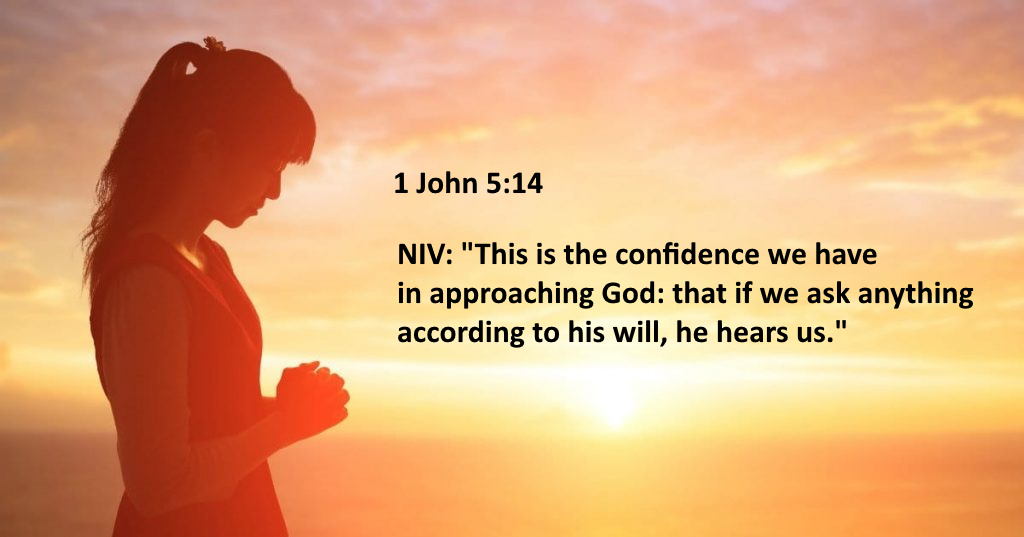
1 John 5:14, NIV: “This is the confidence we have in approaching God: that if we ask anything according to his will, he hears us.”

After emphasizing confidence in eternal life, John comments on confidence in prayer. The believer can know he or she has eternal life and know God hears their prayers. However, this verse specifies that getting a positive answer to prayer is based on asking “according to his will.” This phrase is used only two other times in the New Testament. In Luke 12:47, a parable is told about a servant who did not act “according to his [master’s] will” and received judgment. In Hebrews 2:4, the author mentions gifts of the Holy Spirit distributed “according to his will.”


Verses such as this clear up the common misconception that God promises to give us “absolutely anything” we ask for, no matter what. God is not a vending machine, or a robot. He acts according to His ways, not ours. He hears our prayers, but it should come as no surprise that He responds to those prayers according to His will.

1 Corinthians 12:8, NIV: “To one there is given through the Spirit a message of wisdom, to another a message of knowledge by means of the same Spirit,”

Paul has been describing to the Christians in Corinth what spiritual gifts are. In short, they are manifestations of the Holy Spirit. That is, they are abilities that go beyond normal human capacity in some specific way, even if the display of God’s power is not always obvious. Paul has shown that they are given to every Christian by God to be used for the common good of the church.

Now Paul begins to describe some of these specific gifts. This first list contains nine gifts, and it is not exhaustive. Other passages in the New Testament list additional spiritual gifts (Romans 12:6–8; Ephesians 4:11; 1 Peter 4:10–11).

Some groups of Christians believe this specific set of gifts, sometimes called the sign gifts or confirmation gifts, to have been given to Christians in the early church to demonstrate the power of God and confirm that the gospel was true. These groups typically believe God stopped giving these gifts after the church was established and the New Testament was published. The same group may or may not believe these gifts are given today sporadically and under special circumstances. Other groups of believers, such as Pentecostals and Charismatics believe these gifts are still distributed by the Holy Spirit regularly and throughout the church around the world.

Paul starts the list with two gifts of “utterance” or kinds of messages. He says again that both are given by the same Spirit, though they are slightly different. The first is the “utterance” or “word” or “message” of wisdom, depending on the translation. The second is the utterance of knowledge.

The word of wisdom involves the supernatural ability to offer insight into truth from God in a way that helps others. The word of knowledge might be understood as the ability to proclaim God’s revelation to those who need to hear it or to offer understanding of how it applies to specific areas of life.

1 Corinthians 12:9, NIV: “to another faith by the same Spirit, to another gifts of healing by that one Spirit,”

Paul is listing some of the gifts the Holy Spirit delivers to believers. Not every believer is given every gift. Paul wrote in the previous verse that one is given the utterance of wisdom, while another is given the utterance—or “message”—of knowledge.

Now he adds that one might be given the gift of faith, while another gifts of healing. In all cases, Paul’s emphasis is that these gifts are given by the same Holy Spirit of God. He is the source of each of them, and all the power behind them comes from God.

By definition, every born-again believer has faith in Christ and faith to believe God’s Word. The spiritual gift of faith, as narrowly implied here, seems to involve the ability to trust God with a confidence or certainty that is beyond the ability of other Christians. Some scholars suggest this gift is tied to the rest of the gifts in this list, including the gifts of healing.

The gifts of healing provide the supernatural ability for the person who possesses the gift to restore health or even to hold off death. This is not to be confused with the ability to practice the medical arts or sciences. Those with the gift of healing are empowered by the Holy Spirit to heal a specific ailment supernaturally, often immediately.

Acts 10:38, NLT: “And you know that God anointed Jesus of Nazareth with the Holy Spirit and with power. Then Jesus went around doing good and healing all who were oppressed by the devil, for God was with him.”

Notice that all 3 of the Holy Trinity are involved, God the Father, Jesus the Son and the Holy Spirit. If you are born again the same Holy Spirit is in you, the same Power of God is in you and you have the righteousness of Jesus.

 Throughout His ministry, Jesus blessed the vulnerable and held the powerful responsible (John 2:1–11, 13–16; Mark 10:13–16), He healed the demonically oppressed (Mark 1:23–26; 5:1–13; Matthew: 17:14–18), and brought the dead to life (Mark 5:39–43; John 11:38–44). Most importantly, not only was God with Him, He is God with us (Isaiah 7:14; Matthew 1:23).


In the previous verse, Peter described Jesus’ refusal to retaliate against those who mistreated Him. Jesus chose this path because He trusted the Father to be the just judge, to make all things right. Jesus suffered for doing good, without fighting back, so He could fulfill His purpose. Verse 24 describes exactly what that purpose was.

1 Peter 2:24, NLT: “He personally carried our sins in his body on the cross so that we can be dead to sin and live for what is right. By his wounds you are healed.”

If Jesus had not willingly endured unjust suffering, we would have remained lost in our sin. Instead, Jesus bore, or “carried,” our sins and physical suffering on the cross. He actually died in order to pay the penalty for our sinful actions. He became our substitute, dying the death we deserved. God, the one who judges justly (1 Peter 2:23) judged Christ for our sin in that moment, pouring out His wrath on His own Son to satisfy the payment for our sin. He endured suffering so we could die to sin. In that action, by God’s grace and through our faith in Christ, we have been freed. Believers are free from the price of our own sin, from the power of sin to poison our choices and sickness and disease. Now, thanks to Jesus’ suffering, Christians can live righteously. We don’t have to sin; we are free to make right choices that please and honor our God (1 Corinthians 10:13).

The verse ends by quoting Isaiah 53:5. As Christians, we have been healed from the penalty and power of our sin by Christ’s wounds, by His death in our place, by His suffering for our good. The wounds—the suffering—of Jesus are the means by which Christians are healed—not only forgiven by God for our sins but physical healing from sickness and disease.

Pastors Nathan and Salila Gonmei of Abundant Grace Church in Chiang Mai Thailand explain Biblical health and healing and how to walk in it in English and Thai languages in the 16 minute video below.

All Thailand Experiences, Living with Courage.

Living with Courage

Hello again, I’m Randy Gaudet, founder and director of All Thailand Experiences. Those who have read my profile know how I first came to Thailand and my association with missions and churches since 1989.

We use funds from our tours to help the needy, change lives and spread the Good News of the Gospel of Jesus Christ. We teach about the Holy Trinity, Love and Grace because of Jesus Christ and to tell Christians they are free from the Law, sin and death.

At most churches in Thailand the old covenant law is being taught and that Grace is not available to you if you break the law. We are training pastors about the New Repentance as written in the Bible with help from Pastors Nathan and Salila Gonmei at Abundant Grace Church in Chiang Mai.

On all our All Thailand Experiences Christian teaching blogs I will point to scriptures and explain the meaning on the topic. As our mission is to reach Thai people we will then watch or listen to Pastors Nathan and Solila give a sermon on the topic in English and Thai Languages.

When the Holy Spirit put doing mission work in Thailand in my heart without support and to start a tour company to support the mission I had about $50 U.S. Dollars. I had to step out, be brave and trust in Him. Courage comes knowing your spiritual identity in Christ.

Today we’re going to talk about Living with Courage.

Proverbs 28:1, NIV: “The wicked flee though no one pursues, but the righteous are as bold as a lion.” NLT: “The wicked run away when no one is chasing them, but the godly are as bold as lions.”

Righteousness is a powerful concept that is made up of sub-concepts. We are called to seek “his righteousness” (Mt 6:33). Underneath this quality are sub qualities that will be ours when we are righteous. Love, patience, and all the other fruits of the Spirit (Gal 5:22-23) will be present. And also, boldness will characterize the righteous man or woman of God. You could call this courage or bravery, but righteousness breeds boldness.

2 Corinthians 5:17, NIV: “Therefore, if anyone is in Christ, the new creation has come: The old has gone, the new is here!”

We are now righteous because of the blood of Jesus Christ.  We are no longer slave to the sinful nature brought on by the disobedience of Adam and the Law.

How does righteousness lead to boldness? One way is that to be righteous, one must first accept Christ. Our first act of boldness is to come into the presence of God (Heb 4:16), boldly, because we are holy by our justification, redemption, and adoption as sons of God in Christ. God fills us with the Holy Spirit who, himself, is bold. Then as we mature, we learn to care what God thinks of us more than what other people think of us, as we die daily to our old ways and mortify the sin in our flesh. This we do by the power of the Holy Spirit and abiding in Christ in obedience. Finally, as we learn to know the truth in our inner man or woman, we are sure of what we think and believe about things, so that when the time comes for boldness, we are ready to step forward like a lion.

Alternatively, any boldness on the part of the wicked is just for show. Most of them will flee in the face of true and godly boldness. They live life insecure and afraid of being caught in their schemes and deceptions. They have no genuine confidence, and consequently, they must run from conflict except when their adversary is truly helpless, in which case they will attack like cowards.

“The wicked…” The Bible teaches that all of us were born in a state of sinfulness because of the sin of Adam (Eph 2:1). Until Christ saves us, we are wicked. Our motives are wicked. Our actions are wicked. It is not that nonbelievers can do nothing good, but even the good they do is sinfully motivated (Isa 64:6).

“…flee though no one pursues,” This describes the paranoia of the godless. Why would they not be paranoid? If there is no God, anything can happen to them at any time. There is no true boldness, only arrogant bravado. There is no true conviction, only the subjective opinions of the other people whose disapproval they fear.

“but the righteous…” The righteous are those who are saved by grace and filled with the Holy Spirit, learning to integrate into every fiber the truth and confidence of living by the ways of God, abiding in Christ and trusting him in all circumstances.

“…are as bold as a lion.” Sons and daughters of God are like their Savior, the Lion of the Tribe of Judah. While being meek when meekness is called for, God’s children, the righteous, are also able to be bold when boldness is what is needed. The fear of the Lord is a remedy against the fear of man or disaster (Mk 4:35-31).

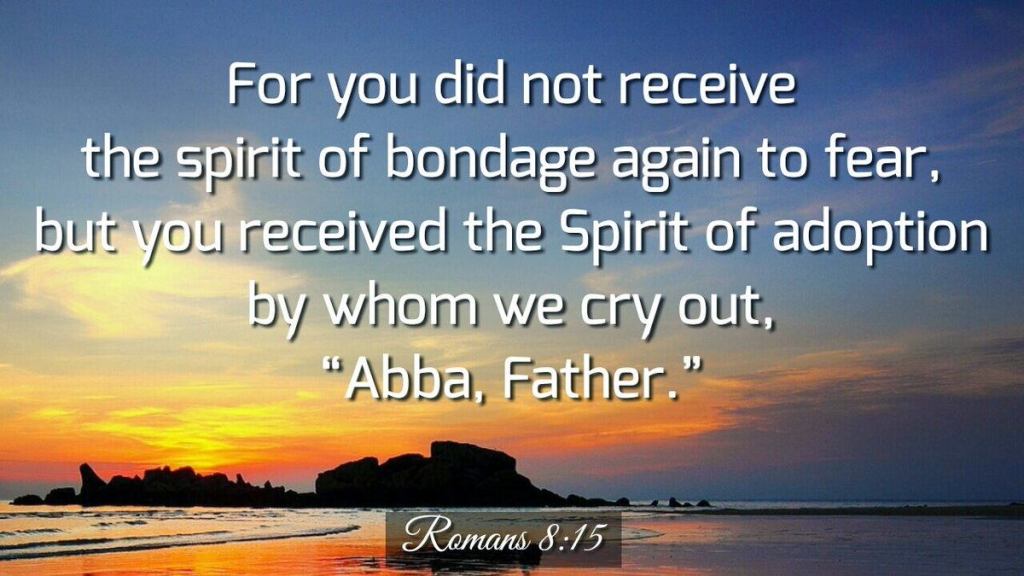
Romans 8:15, NIV: “The Spirit you received does not make you slaves, so that you live in fear again; rather, the Spirit you received brought about your adoption to sonship. And by him we cry, ‘Abba, Father.'”

Romans 8:15 is one of Scripture’s most beautiful verses about our relationship with God through faith in Christ. It describes how God has changed every Christian’s relationship with Him through the power of the Holy Spirit.

In the previous verse, Paul wrote that all who are led by the Spirit of God are His children. Now he gets more specific. Earlier in this letter to the Romans, Paul wrote that through faith in Christ we are freed from slavery to sin and that we become “slaves to righteousness” (Romans 6:18) or “slaves to God” (Romans 6:22). Paul is not backing away from that in this verse. The word used for slaves—doulos—describes what was once known as indentured service: when a person swore their allegiance to remain in the service of a specific master.

Here, though, Paul assures us that God does not view us as His slaves or even just good servants. He did not free us from slavery to sin simply to add us to His team. He rescued us from sin to make us His children. That involves the Holy Spirit.

God did not give us the spirit of slavery, by giving us the Holy Spirit. Abused slaves often live in fear of their masters, and that is not the relationship God wants from us. No, Paul insists, God gave us the Spirit of adoption as his children. In other words, God legally changed the status of those who come to Him by faith in Christ to sons and daughters.

This is not a distant or strained parent/child relationship, either. This Spirit of adoption, another name for the Holy Spirit, allows us to cry out to God as little children call out to a loving daddy. The word Abba is a Greek and English adaptation of the Aramaic word for father. It was often the word used by young children for “papa” or “daddy.” That’s the relationship God wants with us, and He has made it possible through the Spirit.

Pastors Nathan and Salila Gonmei of Abundant Grace Church in Chiang Mai Thailand explain Biblical living in courage and how to walk in it in English and Thai languages in the 16 minute video below.

All Thailand Experiences, The Holy Spirit in You.

The Spirit of truth

The Holy Spirit lives in you.

Hello again, I’m Randy Gaudet, founder and director of All Thailand Experiences. Those who have read my profile know how I first came to Thailand and my association with missions and churches since 1989.

We use funds from our tours to help the needy, change lives and spread the Good News of the Gospel of Jesus Christ. We teach about the Holy Trinity, Love and Grace because of Jesus Christ and to tell Christians they are free from the Law, sin and death.

At most churches in Thailand the old covenant law is being taught and that Grace is not available to you if you break the law. We are training pastors about the New Repentance as written in the Bible with help from Pastors Nathan and Salila Gonmei at Abundant Grace Church in Chiang Mai.

On all our All Thailand Experiences Christian teaching blogs I will point to scriptures and explain the meaning on the topic. As our mission is to reach Thai people we will then watch or listen to Pastors Nathan and Solila give a sermon on the topic in English and Thai Languages.

Today we’re going to talk about The Holy Spirit. The Holy Spirit, in a sense, does from the inside what Christ would do from the outside: teach, convict, remind, and guide. In John 14:17, Jesus will clarify that this Helper is the Holy Spirit, who is available only to those who believe .

Many people misunderstand who the Holy Spirit is. Using Biblical scripture we will show you that the Holy Spirit is a person and will be with you for eternity if you have excepted Jesus Christ.

The Holy Spirit

Ephesians 1:13, NLT: “And now you Gentiles have also heard the truth, the Good News that God saves you. And when you believed in Christ, he identified you as his own by giving you the Holy Spirit, whom he promised long ago.”\

Sealed With The Holy Spirit

Notice how the sealing, occurring at only one time, is linked to one’s belief in Christ. Just as our saving belief happens only once, so the sealing, the guarantee of our faith, only happens once and remains with us for eternity

Paul describes three things that took place in the lives of the Ephesian believers. First, they heard the gospel, known as the word of truth (2 Timothy 2:15; James 1:18).

Second, rather than rejecting the message as many Jews had done, these Gentile believers both heard and believed the gospel and were saved as a result (Romans 10:9; Ephesians 2:8–9).

Third, Paul noted that when they became believers they “were sealed with the promised Holy Spirit.” This specific description of the Holy Spirit is only used in the book of Ephesians here, and in Ephesians 4:30, among a dozen total references to the Spirit in the letter. A “seal” was a mark indicating a letter or scroll was closed or completed. When a king or dignitary wanted to show an identifying mark with a letter, he would seal it with a resin imprint of his ring. The Holy Spirit likewise shows that believers belong to the Lord.

John 14:16, NLT: “And I will ask the Father, and he will give you another Advocate, who will never leave you.”

John-14-16

Jesus commanded the disciples to love each other (John 13:34–35) and to obey His commands (John 14:15). He has also reassured them that knowledge of Him is their means of salvation (John 14:6). In that context—acting in His name—Jesus also promised to provide whatever is asked of Him (John 14:14).

English translations of this verse are relatively consistent, but translating from Greek blurs a subtle difference in this statement. When Jesus refers to the disciples “asking” for something in prayer, He uses the root word ait󠅍eō (John 14:13–14; 15:7; 16:23). Here, however, Jesus uses the term erōtaō. This also means “to ask,” but carries a more personal and mutual sense. Jesus uses both words—with the same distinction between their requests and His—in John 16:26. This, once again, implies that Jesus shares a relationship with God which transcends mere humanity. It also reinforces the idea that prayer is not intended to blindly grant us our wishes.

“Helper,” here, is translated from the root term paraklētos. This can also be translated as a “comforter,” or “advocate.” This is the same term John will use later to describe Jesus in 1 John 2:1. That connection has meaning—Jesus will later point out that He is leaving behind His earthly ministry specifically, so the Holy Spirit can act (John 16:7). The Holy Spirit, in a sense, does from the inside what Christ would do from the outside: teach, convict, remind, and guide. In the following verse, Jesus will clarify that this Helper is the Holy Spirit, who is available only to those who believe (John 14:17).

This Spirit is guaranteed to be with the believer “forever.” This contrasts with the work of the Holy Spirit in the Old Testament, which came and went from God’s servants at various times (1 Samuel 19:23; 2 Chronicles 15:1; Judges 14:6).

The beautiful role of this “Helper” is also demonstrated by understanding its translation. In legal terms, the “defense attorney” is the paraklētos. The opposing side is the “accuser,” from the Greek katēgōr, a term John uses in Revelation 12:10. The concept of an “accuser” features heavily in the Old Testament, through the phrase ha sā’tān. The One who stands by us and guides us is God, the Holy Spirit—our accuser and enemy is Satan.

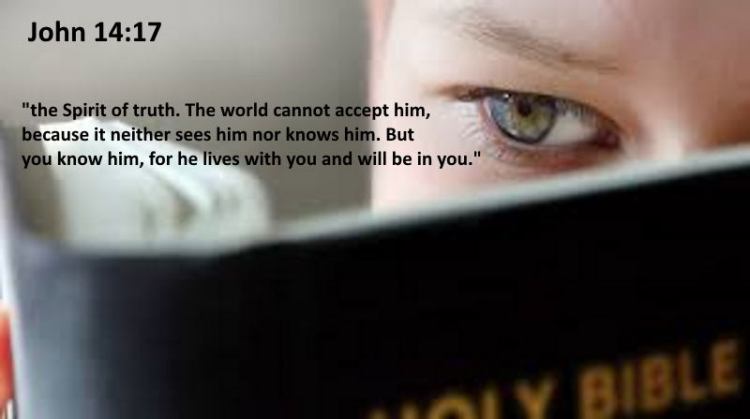
John 14:17, NIV: “the Spirit of truth. The world cannot accept Him, because it neither sees Him nor knows Him. But you know Him, for He lives with you and will be in you.”

IS THE HOLY SPIRIT A PERSON?

The Identity of the Holy Spirit 

To many people, the Holy Spirit is an enigma. Some see Him as an impersonal force or influence, some deny His very existence, and others are not certain who or what the Holy Spirit is. However, the Bible is very clear on this matter; the Holy Spirit is a person, the Third Person of the Holy Trinity.

The Definition of Person

By “person,” we mean one who has their own identity or individuality as a rational being. They are conscious of their own existence.

When we say that the Holy Spirit is a person some assume that He has eyes, feet, and hands. But these are not the marks of a person. The marks of a genuine person are knowledge, feeling, and will.

The fact that the Holy Spirit is a person can be observed in six ways.

The Holy Spirit is A Person
  1. He acts like a person.

2. He is treated as a person.

3. He has the ministry of a person.

4. He is mentioned in connection with other persons.

5. He is the Third Person of the Trinity, and therefore, is personal.

6. The Holy Spirit Has the Characteristics of a Person

We will now consider the personality of the Holy Spirit.

The Scriptures attribute to the Holy Spirit characteristics that only a person can truly possess. He is portrayed as a thinking being, a being who has a mind, an emotional being, and a volitional (or choosing) being.

The Holy Spirit Is a Thinking Being

The Bible says that the Holy Spirit has the intellectual capacity to think and know. These are the marks of personhood.

As we search the Scripture, the Holy Spirit is ascribed personality in the fullest sense. Indeed, through a study of Scripture a number of things become clear. The Holy Spirit has the attributes of a person. He has characteristics that only a genuine person can have.

The Spirit also performs the acts of a person. In other words, He does things that only a person can do. The Holy Spirit is treated as a person. In historical situations the Spirit of God is treated as other persons are treated. The Holy Spirit has the ministry of a person.

He does things that in the Christian ministry that only persons can do. The Holy Spirit is mentioned in connection with other persons. This is further indication that the Spirit of God is indeed a person.

The Holy Spirit is God, and therefore, by nature is personal. Each of these truths makes it clear that Spirit of God is indeed a person.


Galatians 5:25, KJV: “If we live in the Spirit, let us also walk in the Spirit.”

walk in the Spirit

Paul has been describing what it looks like to live as one who is free in Christ. He has been clear that this is not a freedom to do whatever feels good. It is not a freedom to simply indulge in trying to satisfy all our sinful desires. On the contrary, true salvation—and freedom from the Old Testament’s ritual law—is freedom from being controlled by our sinful desires. How? Just as we needed an external source, Jesus, to pay for our sin, we also need an external source of power, the Holy Spirit, to overcome our sinful desires and lead us in the right direction.

This happens, Paul has written, when we “walk by” (Galatians 5:16) and are “led by” (Galatians 5:18) the Spirit. The picture he paints is not one of possession in the sense that the Spirit takes us over and does whatever He wants. We are not spiritual robots, or puppets who suddenly lack free will. Instead the picture is one of Christians using our will to allow God’s Spirit to set the direction we will go.

It’s a mysterious idea than none of us fully understand, but the way Paul describes it in this verse is helpful. He says living by the Spirit involves keeping in step with the Spirit. It involves adjusting our pace to match the pace and direction the Spirit is leading. Sometimes, Bible teachers describe it as allowing one’s partner to lead in a dance. In other words, it involves submitting to God’s way, but we are still the one taking each next step.

This will not happen automatically. It is something we must choose from day to day. In fact, we must often choose to give the lead to the Spirit moment by moment .

Pastors Nathan and Salila Gonmei explain Biblically who the Holy Spirit is and how to walk with the Holy Spirit in the video below in English and Thai languages.

All Thailand Experiences Delivering Hope

Hope, Joy and Peace

Hello again, I’m Randy Gaudet, founder and director of All Thailand Experiences. Those who have read my profile know how I first came to Thailand and my association with missions and churches since 1989.

We use funds from our tours to help the needy, change lives and spread the Good News of the Gospel of Jesus Christ. We teach about the Holy Trinity, Love and Grace because of Jesus Christ and to tell Christians they are free from the Law, sin and death.

At most churches in Thailand the old covenant law is being taught and that Grace is not available to you if you break the law. We are training pastors about the New Repentance as written in the Bible with help from Pastors Nathan and Saia Gonmei at Abundant Grace Church in Chiang Mai.

On all our All Thailand Experiences Christian teaching blogs I will point to scriptures and explain the meaning on the topic. As our mission is to reach Thai people we will then watch or listen to Pastors Nathan and Solila give a sermon on the topic in English and Thai Languages.

Today we’re going to talk about Hope.

Romans 15:13, NIV: “May the God of hope fill you with all joy and peace as you trust in him, so that you may overflow with hope by the power of the Holy Spirit.”

Hope” is commonly used to mean a wish: its strength is the strength of the person’s desire. But in the Bible hope is the confident expectation of what God has promised and its strength is in His faithfulness.

Ordinarily, when we express hope, we are expressing uncertainty. But this is not the distinctive biblical meaning of hope. And the main thing I want to do this morning is show you from Scripture that biblical hope is not just a desire for something good in the future, but rather, biblical hope is a confident expectation and desire for something good in the future.

Biblical hope not only desires something good for the future — it expects it to happen. And it not only expects it to happen — it is confident that it will happen. There is a moral certainty that the good we expect, and desire will be done.

The Holy Spirit indwells us as believers. In addition to the many roles He plays in our lives, He seals us as belonging to God (see Ephesians 1:13-14). The Holy Spirit is the person of God who lives in us in our time on earth and teaches us to truly know and follow God.

Hope can be described as happy anticipation of good which is coming for the believer. This comes from knowing God because he is the author of hope so the more we walk with him the more this hope will overflow in our lives and others around us will take notice.

Paul writes to the Romans “May the God of hope fill you with all joy and peace as you trust in him”. Trust is something that is learned and experienced. The further we walk in fellowship with the Lord the more we know him and understand his will and desires concerning us. He fills us with joy and peace in His presence.

Joy is the source of happiness; it is more than a feeling. It is the ability to be content and joyful in every circumstance. Hebrews says that Jesus was anointed with the oil of joy (Hebrews 1:9, Psalm 45:7). Meaning; there has never been anyone more full of joy than Jesus. As his children it makes sense that we are also anointed and filled full of joy for this life. Peace is harmony in our relationships, but beyond that it can also be understood as a treaty or agreement to cease hostilities.

As God fills you with his peace, you will understand that you are at peace with Him. He is not angry at you for sin, he does not look at you as a filthy sinner, instead He sees you as he sees Jesus ( Ephesians 4:24, NIV: “and to put on the new self, created to be like God in true righteousness and holiness.”, Making this change is impossible without Christ and requires a Christian to be renewed in their thinking by God and the Holy Spirit. 1 John 4:17, NIV: “This is how love is made complete among us so that we will have confidence on the day of judgment: In this world we are like Jesus.”). These things are necessary for this life. The author of hope is able to fill you to overflowing with these things as you learn to trust him and experience Him by faith.

An amazing truth is that this all happens on a supernatural level by the power of the Holy Spirit living inside you as a believer. This hope that Paul is describing is supernatural, it is not based on feelings. This means how you feel cannot dictate whether or not you experience this hope. The hope is given by God and you have it. When we walk with the Lord, the anticipation of future things builds and builds until it overflows in your life.

Remember God is the author of hope and he has given you eternal life, which is knowing him in a personal and intimate way. We experience this life by faith and the more we practice it the more this joy, peace and hope will spill out into the natural realm of our lives.

Pastors Nathan and Salila Gonmei explain Biblical Hope and how to walk in it in the 16 minute video below in English and Thai languages.

All Thailand Experiences, Being Humble

James 4:10 Humble-Yourselves-Sight-Lord-He-Lift-You-Up

Be Humble and receive God’s Power, He cares for you

Hello again, I’m Randy Gaudet, founder and director of All Thailand Experiences. Those who have read my profile know how I first came to Thailand and my association with missions and churches since 1989.

We use funds from our tours to help the needy, change lives and spread the Good News of the Gospel of Jesus Christ. We teach about the Holy Trinity, Love and Grace because of Jesus Christ and to tell Christians they are free from the Law, sin and death.

At most churches in Thailand the old covenant law is being taught and that Grace is not available to you if you break the law. We are training pastors about the New Repentance as written in the Bible with help from Pastors Nathan and Saia Gonmei at Abundant Grace Church in Chiang Mai.

On all our All Thailand Experiences Christian teaching blogs I will point to scriptures and explain the meaning on the topic. As our mission is to reach Thai people we will then watch or listen to Pastors Nathan and Solila give a sermon on the topic in English and Thai Languages.

Today we’re going to talk about being humble using scripture. To live an abundant life full of Grace the Bible teaches us a lot about Humility and how it affects our relationship with God.  There are many benefits of being humble for the born again believer.

Many people misunderstand what true humility really is. Using Biblical scripture we will show you what being humble is all about. Humility is not degrading or lowering your self-esteem but a necessary action to release God’s power in your life.

James 4:10, NIV: “Humble yourselves before the Lord, and he will lift you up.”

Everybody wants to be exalted. We all want to be glorified. Maybe we wouldn’t say so. Maybe we don’t feel it all of the time. But part of the motivation for living according to the world system is to get exaltation for ourselves. This comes in having the things we want, getting the respect we feel we deserve, or living in the comfort and pleasure we crave. God asks us to quit the world’s way of pursuing those things. Instead, He calls us to trust Him to exalt us when the time is right without trying to get that glory for ourselves.

1 Peter 5-6 Humble Yourself

1 Peter 5:6, NIV: “Humble yourselves, therefore, under God’s mighty hand, that he may lift you up in due time.”

All of us long to be glorified. We long to know that we are significant and to have others know it, as well. That desire is not necessarily wrong. All natural human desires have some legitimate, God-honoring purpose, and a means to express it properly. In this case, we are made in God’s image, and He has built into us the desire to be exalted. The key to a biblical, Christian view of glory is paying close attention to what God says about seeking it. The Bible teaches us to quit struggling so hard to make it happen, and trust God to exalt us at the right time and place as He sees fit. He’s a good Father who loves us; let Him be in charge of bringing us glory.

Jesus showed us how to do that. Philippians 2 reminds us that Jesus is God and yet, when He came to earth, He made Himself nothing. Instead, He became a servant to all. Then, at the right time, the Father elevated Jesus to the highest position in the universe. Peter echoes that idea in this and the following verse. Why are we so afraid to put on humility toward other Christians? Why does it bother us to live in submission to other people? We are afraid of becoming insignificant, of going unrecognized, of making ourselves nothing.

As used in Scripture, “humility” does not mean weakness or self-hatred. It means a proper appreciation of how we are, in relationship to God. It means strength under control.
Peter reminds us that we are not humbling ourselves under the hand of our human authorities, including the elders in the church. No, we are willingly humbling ourselves under the hand of God. When the proper time comes, He will exalt us either here, or in the life to come, or both, to some extent. Our willingness to serve, to make ourselves nothing, isn’t a declaration that we are, in fact, insignificant. Our humility in service is a declaration that our mighty God can be trusted to give us all the glory and recognition that we long for when time is right.

1 Peter 5:7, NIV: “Cast all your anxiety on him because he cares for you.”

1PETER5-7 God cares
1PETER5-7 God cares

This verse concludes the thought begun in verse 6. Christians must humble themselves under God’s mighty hand, trusting Him to exalt us at exactly the right time. We must quit the work of seeking our own glory in order to accept the work of serving and submitting to others. Then, when the time is right, our God will use His mighty hand to exalt us.

These are words of great encouragement, and maybe conviction, for those struggling to submit to harsh human authorities. It speaks to those serving year after year with little recognition. It encourages those providing for others of limited power or value in society. Natural human fear tells us we are wasting our lives, we are on the wrong path, that our choice to serve in humility without obvious reward is evidence that we may be worthless, after all.

Peter writes that we should take that fear and cast it—throw it—onto our Father God. In fact, he tells us to take all of our anxieties, everything that worries us, and to give it to the God who cares so deeply for us. This is not a promise that God will fix everything which worries us. God is not obligated to follow whatever script we write for Him. It’s a promise that the mighty God will receive our worries, and care about them. He will carry them for us. He is trustworthy to handle them in the way that is best.

Peter’s words are a command. It is not God’s will for His children to continue to live under those burdens. Believing that God is mighty and cares for us should result in our regularly handing over our worries to Him.

Pastors Nathan and Salila Gonmei explain Biblical humility and how to walk in it in the 16 minute video below. This is in English and Thai languages so share with your Thai friends.

All Thailand Experiences, Keeping A Healthy Soul.

Hello again, I’m Randy Gaudet, founder and director of All Thailand Experiences. Those who have read my profile know how I first came to Thailand and my association with missions and churches since 1989.

We use funds from our tours to help the needy, change lives and spread the Good News of the Gospel of Jesus Christ. We teach about the Holy Trinity, Love and Grace because of Jesus Christ and to tell Christians they are free from the Law, sin and death.

At most churches in Thailand the old covenant law is being taught and that Grace is not available to you if you break the law. We are training pastors about the New Repentance as written in the Bible with help from Pastors Nathan and Saia Gonmei at Abundant Grace Church in Chiang Mai.

On all our All Thailand Experiences Christian teaching blogs I will point to scriptures and explain the meaning on the topic. As our mission is to reach Thai people we will then watch or listen to Pastors Nathan and Solila give a sermon on the topic in English and Thai Languages.

Today we’re going to talk about a healthy soul or spiritual heart. Believe it or not you are a spirit, you have a soul and they live in your body. If you are a believer in Jesus Christ you are born again and you have a new spirit but your soul or spiritual heart has not changed. This is why many Christians keep sinning, doing stupid things, making bad decisions, depressed, angry, lonely and many wrong feelings.

So how do we attain a healthy soul or spiritual heart. God teaches us in His word.

Proverbs 4:23, NIV: “Above all else, guard your heart, for everything you do flows from it.”

Jesus announced: “The good person out of the good treasure of his heart produces good, and the evil person out of his evil treasure produces evil, for out of the abundance of the heart his mouth speaks” (Luke 6:45).

One positive result from maturity in a believer is not being tricked by false teaching. Those who are “no longer children” can stand against lies and deceit. Paul’s analogy of being “tossed to and fro by the waves” sounds like James 1:6, which instructs us to pray in faith without doubting. Jude 1:13 also uses the idea of “wild waves of the sea.” The goal is to avoid being “carried about by every wind of doctrine.” False teaching changes regularly. Those who are immature can easily be fooled into thinking false teaching is accurate.

Ephesians 4:14, NIV: “Then we will no longer be infants, tossed back and forth by the waves, and blown here and there by every wind of teaching and by the cunning and craftiness of people in their deceitful scheming.”

This can take place in two ways. First, believers can be deceived by “human cunning.” This is the power of human persuasion; a smooth talker can wield influence over others. Second, a person can be deceived by “craftiness in deceitful schemes.” These are evil plans that may appear good but actually promote something false. In Ephesians 6:11 Paul will add that believers can “Put on the whole armor of God, that [they] may be able to stand against the schemes of the devil.”

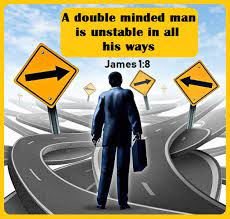
James 1:8, NIV: “Such a person is double-minded and unstable in all they do.”

This verse completes a crucial idea which James introduced in verse 5. God promises wisdom to all who ask Him for it. He promises to give it generously and not based on our merit. The caveat is that we must believe and not doubt. We must not seek wisdom from sources contrary to God at the same time, expecting to weigh God’s wisdom against others and decide which we will follow. We can consult godly advisors, and look to God’s creation, but we can’t weigh His wisdom against that of the world before we decide who to trust.

Verse 7 made it clear that a doubtful person—the one who treats God as only one of many options—should not expect to receive any wisdom from God. This verse calls that person both double-minded and unstable. Trying to live by God’s wisdom while also following a form of “wisdom” from another source will always lead us in two different directions. We will always be deciding whose wisdom feels more right to us in any given moment. In that way, we end up making a god of our own ability to pick the “right” wisdom from day to day.

James makes it clear that the only stable life is one in which a believer has resolved to follow God’s wisdom—period. Those who trust the Father seek wisdom from the Father and follow the wisdom the Father gives, no matter what.

Matthew 11:28, NIV: “Come to me, all you who are weary and burdened, and I will give you rest.”  29,”Take my yoke upon you and learn from me, for I am gentle and humble in heart, and you will find rest for your souls.”

Jesus is not talking about physical rest, necessarily. The following verse will describe it as rest for the soul. The path to the Father through Jesus is not one of weary labor and heavy work. Jesus’ earlier analogy about the path to life being narrow and “difficult” (Matthew 7:14) is entirely separate, and speaking from a different perspective. From the view of the world, following Christ means taking on difficult circumstances and giving up worldly pleasures. From the view of eternity—of salvation—following Christ means giving up the impossible task of carrying our own sin.

A yoke is a wooden device used to harness the working power of an animal, especially oxen. These could be made for a single animal, or to combine the power of several. Jewish people described living under obedience to the Law as having a yoke upon them. In Jesus’ time, the Pharisees made that load even heavier by adding manmade requirements and regulations on top of the Law of Moses (Matthew 23:4).

Now He elaborates, inviting these listeners to put His yoke on them.

The implication is to allow Jesus to put His own yoke on us, the way a farmer would put one on his livestock. It means giving Jesus control and letting Him direct our efforts. The work He has will not be difficult, Jesus says. He wants them to learn from Him. Unlike the Pharisees, Jesus insists that He is gentle. He is lowly in heart (Philippians 2:6–7). He has not come to add to their burden but to give them rest for their souls.

Hebrews 4:9, KJV: “There remaineth therefore a rest to the people of God.” Here, the point is made that since God’s seventh day Sabbath rest from creation (Hebrews 4:3–4) is ongoing, the “rest” He offers is available right now, to those willing to trust and obey.

Here are sermons from Pastors Nathan and Salia Gonmei at Abundance Grace Church in Chiang Mai Thailand teaching us in this 3 part series on A Healthy Soul. the sermons are in both English and Thai so you can share with your Thai friends.

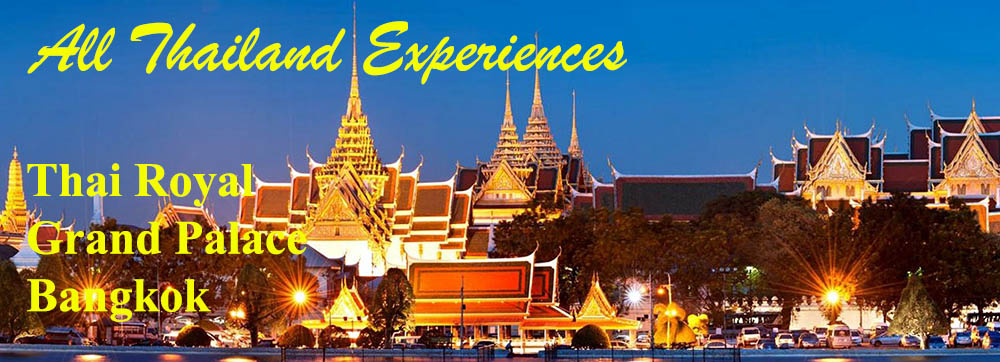
Thai Royal Grand Palace

Thai Royal Grand Palace

The Thai Royal Grand Palace Bangkok Thailand

There are many Thai words in this blog so if you are listening to the Podcast the pronunciation of some words might not be correct. We apologize.

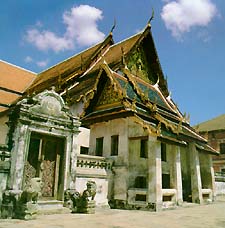
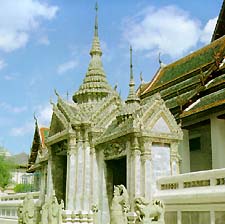
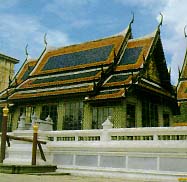
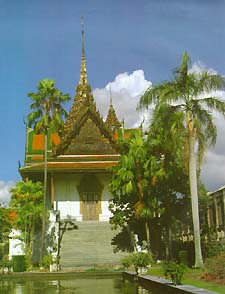
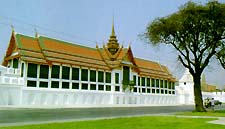
This city landmark should be the first place on any visitor’s itinerary. It is a huge compound on Na Phra Lan Road surrounded by high white walls and occupies an area of about a square mile. The Royal Palace, begun in 1782 when Bangkok was founded as the capital of Thailand, consists of several buildings with highly decorated architectural designs.

The royal chapel or Wat Phra Kaeo, situated in the same compound, enshrines the sacred Emerald Buddha image and is noted for its very beautiful architecture and decorative elements.

On the right hand side, before entering the palace’s inner gate is the Royal Thai Decorations and Coin Pavilion which displays coins and other monetary exchange units used in Thailand since the early 11th century AD, as well as Royal regalia, decorations and medals used in the former royal courts.

The complex is open daily from 8.30 a.m.-3.30 p.m. Admission fee is 125 baht. (including a ticket to Vimanmek Royal Mansion). Proper attire is essential.

Construction of the Royal Palace began in 1782 and was completed in time for the coronation of Rama 1. The original living quarters were temporary and made of wood and thatch and the walls surrounding the palace were made of wood palisades. After the coronation the King moved into a mansion built of permanent materials. The only other building of permanent material at the time was Wat Phra Si Rattanasatsadaram (Temple of the Emerald Buddha) and the forts along the walls.

The plan of this new Royal Palace follow that of the Ayutthaya period. Only the central building seen today was missing until constructed as the Chakri Maha Prasat during the reign of King Rama 5. The area of the original palace was about 51 acres. King Rama 2 expanded the area to todays size of about 60 acres. The Royal Palace contains a number of halls, residences, and other buildings constructed by King Rama 1. Later monarchs altered some and renovated others while still others were enlarged or torn down to make way for newer buildings. All the buildings are not listed here but the most important ones are. The buildings are listed in groups according to their location inside the palace walls. A trip to Bangkok would not be complete without visiting the Royal Grand Palace.

Entrance to Chakraphat Phiman Phra-Thinang Chakradhat Phiman

The Phra Maha Monthain Group

Phra Maha Monthain

This group of buildings is located in the central part of the Grand Palace toward the eastern side. It was the first group of buildings constructed by King Rama 1 and his own residence. He also used it for his coronation and has been used for coronations of all monarchs of the Chakri This is the main building of the group and is a living apartment containing the Royal bed chamber and a large sitting room which now houses the Royal Regalia. It is the custom for the newly crowned King to spend a night in this palace to indicate that he has assumed the responsibilities for and power over the realm. the first few monarchs used this building as their living quarters but the Kings of later times built their own residences. They come here only to spend the night of their coronation in accordance with tradition.

Entrance to Phaisan-thaksin Audience HallPhra Thinang Phaisan-Thaksin

Phaisan-thaksin Audience Hall

An important part of the coronation takes place here. On an octagonal throne the King receives the invitation from the representatives of the people to rule over the Kingdom. He also receives the Royal Regalia including the crown and the nine-tiered white umbrella from the chief of the Court Brahmin. In the middle of the hall is an alter where the symbolic guardian figure of Siam “Phra Siam Devadhiraj” was placed.

Entrance to Amarintha-Winitchai audience hall – Phra Thinang Amarintha-Winitchai Audience Hall

Phra Thinang Amarintha-Winitchai Audience Hall

There are two things in this hall which were made during the reign of King Rama 1. The upper throne is in the shape of a boat which is now used as an altar and another in front of it which is surmounted by a nine-tiered umbrella. In the olden days this building was used as the formal audience hall where the King met with his officials to discuss state affairs. This audience hall is used for many ceremonies such as their majesties birthday rites and merit making ceremonies. The King also received the credentials of foreign envoys in this hall.

Dusidaphirom PavilionPhra Thinang Dusida Phirom

Dusidaphirom PavilionPhra Thinang Dusida Phirom

This Pavilion was built in the time of King Rama 1 and originally made of wood. Bricks and mortar were added during the reign of King Rama 3. This building was the robing chamber for the arriving or departing king by Palanquin or elephant.

Phra Thinang Chakri Maha Prasat Group

This group was built by King Chulalongkorn (Rama 5) and in the beginning consisted of 11 buildings but only three remain today.

Chakri Maha Prasat
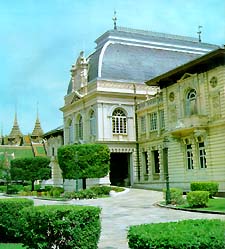
This building was constructed by King Rama 5 to commemorate the centenary of the Chakri Dynasty. It was designed by a British architect in the European style with a pure Thai Style roof. Construction took six years from 1876 to 1882.

Chakri Maha Prasat

Chakri Maha Prasat On the top floor of the central mansion are kept the royal ashes and the king gives public audiences from the front projection. The second floor serves as an audience hall and the ground floor is the office of the royal guards.

On the top floor of the eastern wing religious objects are kept. the middle floor serves as a reception hall for royal guests. the lower floor serves as a guest waiting room.

On the top floor of the western wing ashes are kept of the royal queens and high ranking princes and princesses. The middle floor is the guest chambers and the lower floor serves as a library.

The Throne Room

Two galleries join the central portion to both the east and west wing. The eastern portion also has a reception room where portraits of the kings of the Chakri dynasty from Rama 1 to Rama 7 are displayed. In the west portion is a hall where portraits of the queens of Rama 4, Rama 5, and Rama 7 are displayed.

The Throne Room

In the rear center of the Chakri Maha Prasat is the Chakri Throne Room. Here the King receives ambassadors on the occasion of the presentation of their credentials. The emblem of the Chakri dynasty is depicted on the wall behind the throne.

Borophiman Mansion and Siwalai Garden Group

When King Rama 2 had the palace precincts expanded he ordered three golden halls and many European and Chinese style building to be constructed. Later King Rama 3 had these buildings pulled down to make room for temples to be constructed dedicated to his late father. King Mongkut (Rama 3) ordered a residence also be constructed and stayed there until the end of his life.

Phra-Thinang Siwalai Maha Prasat

Siwalai Maha Prasat, Phra-Thinang Siwalai Maha Prasat

This building was built by King Chulalongkorn (Rama 5) to enshrine the statues of the four previous kings in the Chakri dynasty in 1869. Later King Rama 6 had the statues moved to the Temple of the Emerald Buddha. Since then Siwalai Maha Prasat has been left vacant.

Sitalaphirom PavilionPhra-Thinang Sitalaphirom

Sitalaphirom Pavilion, Phra-Thinang Sitalaphirom

This small pavilion made of wood was built by King Rama 6 as a place for his private repose and as a seat during open air parties. At present the King sits there when he gives a garden party or on his birthday for high ranking government officials.

Phra Phuttha Rattanasathan

Phra Phuttha Rattanasathan

This building was built by King Rama 4 to install the Buddha image called Phra Buddha Butsavarat which was brought from Champasak in Laos. The building has been used by the king for some Buddhist rituals including ordination ceremonies.

Boromphiman Mansionm, Phra-Thinang Boromphiman

Boromphiman MansionPhra-Thinang Boromphiman

This European style building was built by King Rama 5 who planned to give it to the crown prince, H.R.H. prince Maha Vajirunahis who died before it was completed. Prior to his coronation King Rama 7 stayed here for sometime. King Ananda Mahidol (Rama 8) took residence here together with his younger brother and mother when they returned from Europe in 1945. King Rama 8 passed away in this mansion. It now serves as a guest house for visiting royalty and heads of state.

Phra-Thinang Sutthaisawan Phra-Thinang Sutthaisawan

Phra-Thinang Sutthaisawan

Originally a wood structure without any roof decorations built by King Rama 1 to watch parades and the training of elephants. King Rama 3 had it replaced as it is today. It is used to receive public audience from the balcony.

The complex is open daily from 8.30 a.m.-3.30 p.m. Admission fee is 125 baht. (including a ticket to Vimanmek Royal Mansion). Proper attire is essential.

Thai Boxing, Muay Thai in Chiang Mai Thailand

Thai boxing, Muay Thai

The art of Thai Boxing, Muay Thai, has been the country’s most popular spectator sport for hundreds of years.

It is unique among other kinds of fighting disciplines in its approach to close quarters fighting. Fighters are able to more effectively use their elbows, knees, feet and fists than in other martial art.

The art of Muay Thai has been the country’s most popular spectator sport for hundreds of years.. It is unique among other kinds of fighting disciplines in its approach to close quarters fighting. Fighters are able to more effectively use their elbows, knees, feet and fists than in other martial art.

Muay Thai, Thai boxing

The sport differs from international-style boxing in several ways. International boxing allows the use of only the fists, and blows ‘below the belt or to the kidney area are illegal as are certain kinds of punches. In Muay Thai, the fighters are allowed to do almost anything so long as they don’t cover their opponent’s face with their gloves or poke their opponent’s eyes with their fingers. This makes it a more dangerous sport for the participants, but much more exciting for the Thai spectators .

Before every match, the two fighters dance around the ring to special boxing music. The music pervades the entire event, both uplifting and following the mood of the evening. The dance is called the ‘Raam Muay’ or ‘Wai Kru’ and is intended to honor and pay respect to the boxer’s trainer, his religion, family, sport and the ‘fighting spirits’ . Gamblers and spectators say that they can tell how a fighter will do in the ring simply by watching how he performs the ‘Raam Muay’.

One of Muay Thai’s most feared tactics is the use of elbows. Boxers have a whole repertoire of forward elbows, back elbows and guards. The fearsome Muay Thai fighters of old were said to be able to use their elbows as clubs, swords and axe – resulting from the hard bone at the tip of the elbow and the size of the appendage make it a fearsome weapon. One of the elbow attacks, the swing-back elbow, is thought of as one of the most beautiful moves in Muay Thai, and some stadiums give special awards to boxers who can knock out an opponent this way.

Knees are another of Muay Thai’s unique weapons and skilled boxers can use them in both close and mid-range attacks and parries. There are only a few types of knee attacks, but the power that can be put into a kick is fear-inspiring . Muay Thai opponents often grab the other around the neck to add more force to their knee kicks, and to help their balance.

The feet and legs are the most characteristic of the Muay Thai techniques, so much so that when the Japanese borrowed the sport for their own use they called it ‘kick boxing’. The feet of a Muay Thai master can be used in many ways; sweeping kicks, jumping kicks, combinations with other attacks or even straight to the face of the opponent. Boxers practice kicking their own hands to strengthen their legs and increase their range.

The fist in Muay Thai, while not the most spectacular technique for the crowd, is the most versatile of all of the boxer’s choices. Jabs can be used effectively to annoy and anger the opponent. While hooks or uppercuts can be used to knock him out through a hole in his guard. Thai legends abound with tale of a man who could box with his fists from a crouching position, and even pull his opponent’s whiskers before getting hit. Effective straight punches can do damage to a boxer’s body. A punch must always be thrown to start a Muay Thai fight, alone or in combination with a elbow or knee attack.

The history of Muay Thai goes back some 2000 years, as long as Thai culture itself. As the Thai tribes migrated south from the southern Yunan province of China, they were exposed to attacks and constant harassment from various groups, including the expansionist Chinese. The people were forced to develop a strong military and a formal military doctrine. The military code was called the Chupasart, and it called on all able bodied people to be prepared to come to the aid of their leaders with the current weapons of the time; swords, spears, axes, bows and others. Since not everyone could afford these weapons, many took up the use of the human body as a weapon. Thus Muay Thai was born.

During the reign of King Naresuan the Great (16th cent.), Muay Thai was brought in as part of the training of foot soldiers and remains a part of their education to this day. Many of the day’s battles were settled by soldiers in hand-to-hand combat and Muay Thai reflects this use. Even today, many of the sport’s moves are efficient at breaking through the opponent’s defences to get to the other side.

As with many things in Thai history, it is said that kings have taken an interest in the sport before. One story involves a king in the Ayutthya period named Pra Jao Sri Sanpetch Vlil . He was said to be an avid boxer, and would often conceal himself in the clothes of a commoner in order to take part in the fun, despite the danger to him . Once he was accredited with beating all comers at a temple fair in Ban Pajanta in the Wiset Chaichan district.

Most people think good Thai Boxing can only be seen in Bangkok however excellent matches can be seen all over the Kingdom include small villages. In Chiang Mai Kawaila Boxing Stadium, across the street from Sampakoi market, has exciting matches every Friday night beginning at 8PM. Many good Thai restaurants and food vendors in the area so go purchase your ticket, enjoy a meal then watch the matches.